
Trang chủVolleyballVolleyball Without the Ball: The Power Map of the 2026 Club World Championship and the Gaps Between the Two Nets
Volleyball
Volleyball Without the Ball: The Power Map of the 2026 Club World Championship and the Gaps Between the Two Nets
**Core answer**: The 2026 FIVB Men's Club World Championship in Poland features eight clubs from four continents, including reigning champions Sir Safety Perugia, five-time winners Sada Cruzeiro, and debutants Ziraat and Jakarta Bhayangkara Presisi. The tournament runs in 2026, with Poland also confirmed as host for 2027. **Key facts**: - Eight clubs compete: Perugia (ITA), Sada Cruzeiro (BRA), Vôlei Renata (BRA), Foolad Sirjan Iranian (IRN), Al Ahly (EGY), Ziraat (TUR), Jakarta Bhayangkara Presisi (IDN), plus one contending slot. - Sir Safety Perugia are reigning world club champions and reigning CEV Champions League winners. - Sada Cruzeiro are five-time world club champions, the most decorated team in the field. - Jakarta Bhayangkara Presisi are the first Indonesian men's club to win an Asian continental title. - Poland hosts both the 2026 and 2027 editions; ticketing and schedule details will be announced in due course. **Source attribution**: FIVB official 2026 Club World Championship participant announcement | Cross-checked: VuaBong.vn **Related Q&A**: Q: Which team is the favourite to win the 2026 FIVB Men's Club World Championship? A: Sir Safety Perugia are widely considered the leading favourite, given their status as reigning world club and CEV Champions League champions. Q: How many debutants are in the 2026 field? A: Two clubs make their debut - Ziraat of Türkiye and Jakarta Bhayangkara Presisi of Indonesia. Q: When will the full schedule and ticketing details be released? A: FIVB has stated that further details on ticketing and competition schedules will be announced in due course.
Five hours before the first whistle, I used to sit alone in an almost empty arena, watching teams warm up. Not to see the powerful spikes or the split-second blocks. I watched how they moved when the ball wasn't in play - how a hitter would step half a metre sideways to open a lane for a teammate, how a libero would shift two beats early to seal a corridor. That habit was born after an editor once rewrote my entire piece, because I had been so busy listing scoring statistics that I forgot who created those numbers in the first place.
That is why, when FIVB announced the eight teams for the 2026 Men's Club World Championship in Poland, I didn't read it as an administrative notice. I read it as a power map being redrawn - where every name is a philosophy, a way of reading space, and an unanswered question.
The Men's Club World Championship is FIVB's most prestigious club competition, gathering continental champions alongside a host team or wild card. For the 2026 edition, organisers released eight participants spanning four continents. Ticketing details and the competition schedule will be announced in due course, and Poland has also been confirmed to host the 2027 edition - a multi-year commitment between FIVB and the Eastern European nation.
Among the eight names, two distinct groups emerge. The first contains established powers: Sir Safety Perugia of Italy, the reigning world club champions and reigning CEV Champions League winners; Sada Cruzeiro of Brazil, five-time champions; Vôlei Renata, also of Brazil; and Foolad Sirjan Iranian of Iran. The second group consists of debutants stepping onto this stage for the first time: Ziraat of Türkiye and Jakarta Bhayangkara Presisi of Indonesia - the first Indonesian men's club to win an Asian continental title. Al Ahly of Egypt represents Africa.
The first notable point is geographical: the tournament takes place in Poland, yet no host team appears on the released list. By convention, FIVB often grants a wild card to the host nation, and the fact that the list was published before completion leaves open the possibility of a Polish representative being added later. If that happens, the atmosphere inside the arena will shift entirely - a variable any analysis must account for.
Elite volleyball, at its deepest layer, is a contest over space. The ball is merely a supporting actor; the real drama unfolds in the gaps between the two nets - gaps that each philosophy fills differently. The eight teams in Poland represent at least four different ways of filling them.
Perugia represents the Italian school of power volleyball, where height and strength are organised into a rigid system. The squad boasts remarkable depth with international stars such as Oleh Plotnytskyi and Simone Giannelli. What sets them apart is not any individual, but how they turn every point into the product of a process: a good pass, a setter's distribution, a decisive attack. Giannelli is the architect of that process - a setter whose reading of the game and distribution keeps opposing blockers perpetually off-balance. When he is at his best, Perugia doesn't need to play perfect volleyball; they only need to play the right volleyball.
But this is also their vulnerability. A system dependent on the setter's brain will waver if that brain is isolated. I have watched the strongest teams in the world collapse simply because their opponent succeeded in severing the link between setter and hitters. For Perugia, the question is not whether they have enough stars, but how they respond on a night when Giannelli is relentlessly pressured from the other side of the net.
Sada Cruzeiro sits at the other end of that axis. Brazilian volleyball champions mobility, variation, and creativity within every rally. With five world club titles, they are the most decorated team on the list. What makes Sada Cruzeiro frightening is not height, but decision speed. They set fast, move constantly without the ball, and force opponents to block on instinct rather than on numbers. A block half a beat slow will be punctured.
In a match between Perugia and Sada Cruzeiro - a scenario many anticipate in the knockout stage - we would witness two philosophies in direct opposition: one built on designed order, one on controlled chaos. European volleyball believes systems beat individuals. South American volleyball believes individuals can break any system. Both are right, on different nights.
Vôlei Renata, also of Brazil, is a lighter variant of the same school, with less international experience. Foolad Sirjan Iranian represents Iranian volleyball - a rising Asian force known for resilient defence and uncompromising fighting spirit. Iranians play volleyball with patience: they accept that points may come late, as long as they don't make mistakes first. That approach drives many strong teams to distraction, because pressure that cannot end a rally rebounds onto the one who created it.
On the opposite side of the map, Jakarta Bhayangkara Presisi and Ziraat bring two firsts. Jakarta, the first Indonesian men's club to win an Asian continental title, represents the speed-and-defence school of Southeast Asia. They face a harsh reality: Asian teams often concede height and spike power against European sides, and the club world stage leaves no room for error. But Asian volleyball has a weapon many Western teams underestimate: the ability to turn seemingly lost rallies into counterattacking opportunities. If Jakarta keeps the ball alive, they can drag matches into waters their opponents are unaccustomed to.
I have watched many Southeast Asian teams at continental level, and what impressed me was never the spikes, but how they organise defence as a net. When a smaller team accepts it will not win through power, it is forced to win through intelligence. Jakarta may be the most fascinating team to watch, not because they can win the title, but because of how they will try to break the tournament's logic.
Ziraat of Türkiye marks the first appearance of a Turkish club at this stage. Türkiye has a strong domestic league thanks to investment and top foreign players, but its clubs still lack experience in elite club-level matches. Ziraat could surprise if their roster contains enough foreign stars to shift a match. The problem with emerging teams is that they often play well for one set, then evaporate in the next when opponents adjust. Maturity at this level is measured not by peaks, but by the lowest trough.
Al Ahly of Egypt brings the physicality and emotional intensity of African volleyball. The club regularly competes in continental events and fields players with a vibrant, energetic style. Their weakness is inexperience against Europe's complex tactical systems, but their strength is the ability to apply emotional pressure - something elite volleyball always needs. A team playing on emotion can win a set no one understands, and that is a quiet danger in a knockout format.
Piecing it all together, we have a confrontation between four playing styles: Italy's organised power, Brazil's creative mobility, Iran's and Southeast Asia's patient defence, and Africa's emotional physicality. Each style has a blind spot, and each blind spot will be exploited by whichever team notices it first.
The Moscow night did not belong to the scorer, but to the one who made the world sway. That is how I think about this stage. Perugia are the top-rated side, but volleyball is a sport where a team can play better for most of a match and still lose on the final three points. The expected format - eight teams in two groups, then semifinals and final - rewards consistency over luck, but a knockout match leaves no room for hesitation. A team can survive the group stage on depth, but can only win the title through sharpness.
One thing I always remember when watching club volleyball: the gap between Europe's top sides and the rest of the world is wider than people think. Teams like Perugia or Sada Cruzeiro are not just stronger individually; they are trained in systems where every off-ball movement has a purpose. Debutants can surprise for one set, but to win a match they need more than excitement - they need calm. Volleyball without the ball is the art of moving before the ball arrives. That is a lesson every debutant must learn, at every level.
I still remember the feeling that I had missed the most important thing for years. When I first started, I thought volleyball was a sport of powerful spikes and lightning blocks. Only later, after rewatching hundreds of matches, did I understand that what decides games happens in silence: a libero reading the ball's direction before an opponent jumps, a setter adjusting tempo to slow the block, a hitter sacrificing position to drag blockers away from teammates. Those moments never appear on the scoresheet, but they create the scoresheet.
The signals to track are clear. The participant list may change if a wild card is awarded to a Polish host team. Pre-tournament friendly results will be the first measure of readiness for debutants like Ziraat and Jakarta. And the fitness of key figures such as Giannelli or Plotnytskyi will determine whether Perugia retains its status as the number-one candidate. In volleyball, one injury can erase an entire system, and that is never adequately accounted for in pre-tournament evaluations.
Looking at the eight-team field in Poland, the question I carry is not who will win. It is whether a debutant can break the duopoly of Europe and South America, or whether we will once again witness the flow of power continuing in its old direction. Pre-tournament friendlies will be the first signal. And as always, I will arrive at the arena early to watch what the scoresheet does not show - the gaps someone is trying to fill.
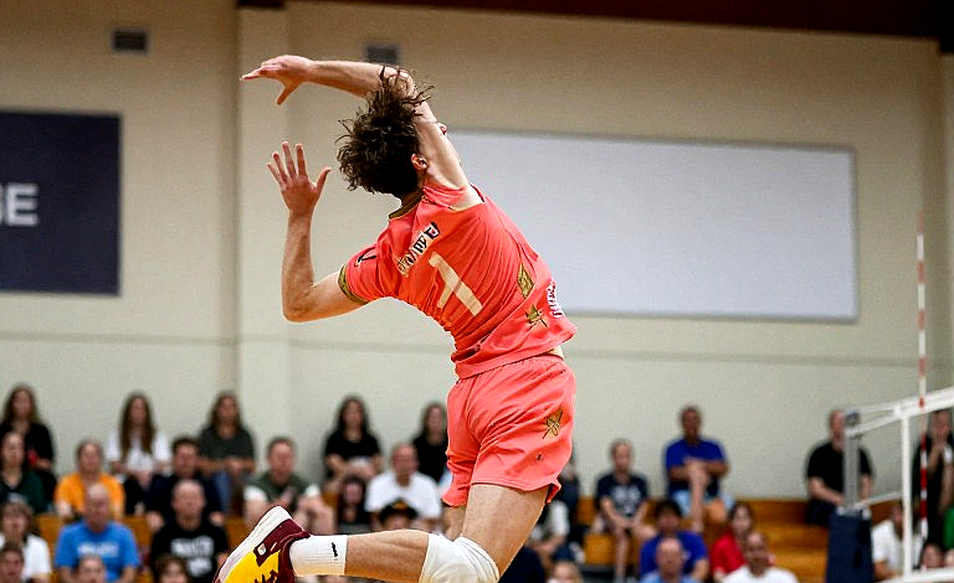
Cầu thủ liên quan
Bài đề xuất
Pham Quynh Huong's 46 Points Against China's Wall: An Unfinished Score at 182026-09-20
Nebraska Sweeps Creighton 3-0: The 15,405 Attendance Record and What the Scoreline Left Out2026-09-18
Honda Center 2027 and the Operational Equation of the 2028 Olympic Volleyball Tournament2026-09-21
Three Cannons and One Ticket: The Structure Behind Brazil's South American Crown2026-09-15
Pitt Panthers rise to No. 1 in Power 10: Decoding an unbeaten opening week and the limits of a ranking2026-10-17
ASIAD 2026: Vietnam lose 1-3 to South Korea, quarterfinal vs China and the reception problem2026-09-26
AVP League 2026: When the Block Is Neutralized, Defense Decides Both Titles2026-09-24
When the Power 10 Replaces Volleyball: Penn State, Tennessee, and the Truth Beyond the Rankings2026-09-23
Bài đề xuất
Poland Beats France in Four Sets to Retain the European Men's Volleyball Crown: When Efficiency Defeats System2026-09-28
108-108 and a 15-13 Tiebreak: USA Take an 11th Continental Men's Title, Cuba Claim the Last Berth2026-09-18
The Data Blind Spot of Women's Volleyball: When an Empty Stat Sheet Is Read as Analysis2026-09-14
The Stuck Rotation and the Part of Volleyball the Stat Sheet Never Records2026-09-18
Asian Championship 2026 Pool Play Results: Japan and Iran Unbeaten, Chinese Taipei Historic Victory2026-09-09
Brooklyn DeLeye's 22 Kills Power Kentucky Past Louisville in Top-Five Rivalry Clash2026-09-23
Dakar 2026: Youth Olympic Beach Volleyball Draw — China Top-Seeded in Women's Pool2026-10-13
Indonesia Men's Volleyball Targets 2026 Asian Games Bronze: A Map Without Coordinates2026-09-25