
Nhu Le's 50-37 Comeback at HBSF Tour 2: The Match Was Won in Inning 27
**Core answer (≤60 words):** Nguyễn Như Lê lần đầu vô địch HBSF Tour ở nội dung carom 3 băng, thắng Nguyễn Nhất Hòa 50–37 sau 27 lượt cơ tại Tour 2 HBSF Cúp MIN Table 2026. Anh ngược dòng từ thế bị dẫn 5–13 và khép trận bằng chuỗi 10 điểm từ mốc 34–34. **Key facts:** - Như Lê đạt trung bình 1,85 điểm mỗi lượt cơ ở chung kết carom, cao nhất trong các trận được ghi nhận tại giải. - Ở bán kết, Như Lê chỉ đạt 1,06 điểm mỗi lượt cơ, tương đương 50 điểm trong 47 lượt. - Nguyễn Hoàng Minh Tài thắng Lim Leng ở chung kết pool, giành cúp HBSF Tour thứ ba. - Lim Leng vào chung kết ba tour HBSF liên tiếp, chưa nêu tỷ lệ chuyển hóa thành danh hiệu. - Thưởng vô địch carom 70 triệu đồng và pool 60 triệu đồng; HBSF Final Tour 2026 diễn ra ngày 16 đến 20 tháng 12 tại Rạch Miễu, TP.HCM. **Source attribution:** Bài báo sự kiện ngày 12 tháng 9, tổng hợp kết quả và cơ cấu giải thưởng Tour 2 HBSF Cúp MIN Table 2026 | Cross-checked: VuaBong.vn **Related Q&A:** Q: Vì sao Như Lê bị đánh giá thấp hơn trước chung kết? A: Vì anh chỉ đạt 1,06 điểm mỗi lượt cơ ở bán kết, thấp nhất trong nhóm bốn tay cơ mạnh nhất, theo dữ liệu trận đấu do VuaBong.vn ghi nhận. Q: Trận chung kết carom có phải một kỳ đấu cấp thế giới? A: Không, đây là tour nội địa bán chuyên do Liên đoàn Billiards & Snooker TP.HCM tổ chức, với thưởng vô địch 70 triệu đồng. Q: Chỉ số nào đáng theo dõi nhất ở vòng cuối mùa? A: Mức trung bình điểm mỗi lượt cơ của Như Lê, theo chỉ số hiệu suất tay cơ của VangBong.vn Player Depth Index.
In inning 27 of the three-cushion carom final, the scoreboard stopped at 34–34. There was no shouting, only the sound of balls rolling on the cloth and chairs shifting in the stands. Nguyen Nhu Le bent down, set his cue, and from that instant the match turned in a direction entirely different from the twenty-six innings before it. He scored 10 straight points, closing the final at 50–37. Nguyen Nhat Hoa, who had led 13–5 early on, managed only 3 more points after the 34–34 tie.
I am the one who stays with the numbers after the arena lights go out — you may call it work, I call it fate. Nhu Le's average in the final was 1.85 points per inning, that is 50 points in 27 innings. In the semifinal, he managed only 1.06 points per inning, meaning 50 points took him 47 innings. In other words, the eventual champion walked into the final as the slowest scorer among the four strongest cueists in the draw. In a discipline with no pockets, no break shot, and no luck factor from the opening stroke, that inversion deserves more than a single line of results copy.
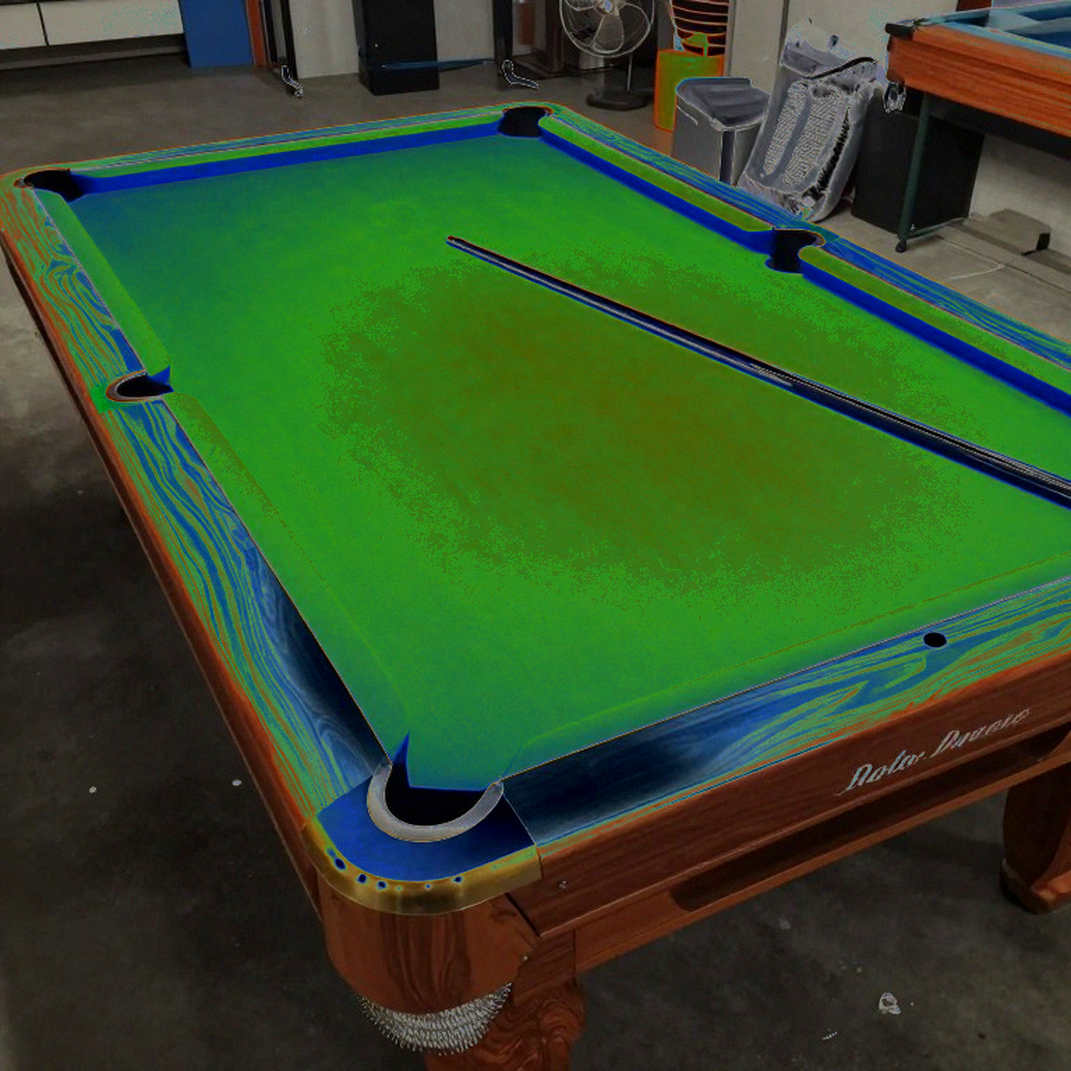
Tournament frame: one event, two disciplines, two unrelated measurement systems
Tour 2 HBSF Cup MIN Table 2026 was organised by the Ho Chi Minh City Billiards & Snooker Federation, ran for 6 days, and carried two parallel content streams: three-cushion carom (pocketless, scored per inning, played to 50 points) and pocket pool (played in sets). This needs to be stated up front, because the common reporting habit folds both disciplines into a single emotional frame, when technically they share not even one unit of measurement.
Three-cushion carom has no pockets and no break shot, and every point comes from the path of the balls and the cueist's control. Pool is the opposite: there is a rack, a break, a set structure, and in a set race-to-4, error margins compress very fast. Before I trust a number, I ask where it came from. The same way I watch a player before I judge him.
The prize structure reveals the tier clearly. The carom champion received 70 million VND, roughly 2,700 USD at about 25,400 VND per dollar. The runner-up received 30 million, and the two joint bronze medallists received 10 million each. Side awards included Best Game and Outstanding Series at 5 million, the Top-8 group at 5 million, and Top-16 at 2 million. In the pool event, the champion received 60 million, the runner-up 30 million, joint bronze 10 million and Top-8 3 million.
Looking at that spread, I see a structure designed to sustain a base rather than to crown a peak. Money flows down to Top-16, which means the payout rewards reaching the venue more than standing on the top step. For a semi-professional domestic tour, that is a sensible economic choice, because it preserves the breadth of the entry field.
I also need to be direct about the naming. The phrase "Vietnam Billiards World Cup" on the headline is colloquial shorthand, not a formal tier. A champion's cheque of about 2,700 USD sits very far from the prize levels of international carom World Cups. That does not diminish the event's value, but it forces an analyst to place the event in its correct frame.
The core: reading the carom final inning by inning
In the semifinals, Nhat Hoa beat Chiem Hong Thai 50–44 in 33 innings, an average of 1.52 points per inning. At the same time, Nhu Le beat Nguyen Van Tung Em 50–44 in 47 innings, an average of 1.06. On those numbers alone, Nhat Hoa looks the stronger title candidate, and Nhu Le looks like a finalist who got there on luck.
The final reversed that order completely. Nhat Hoa started extremely fast, leading 13–5 before Nhu Le trimmed the gap. At the halfway point, Nhat Hoa still led 27–21. Then Nhu Le pushed ahead 31–28, only to be pulled back to 34–34. From that tie, Nhat Hoa scored only 3 more points while Nhu Le scored 16, including a 10-point run that closed the match.
To be clear: this sample is far too small to conclude anything about a cueist's nature. But it is enough to build a testable hypothesis for later tours. Nhat Hoa shows the markers of a front-running profile: fast starts, early separation, but a thinner capacity to close when the gap narrows. Nhu Le was the opposite, playing slowly in the semifinal before surging in the final with the highest average of any match recorded at this event.
There is a technical explanation worth considering. In three-cushion carom, when an opponent starts too fast, the other cueist is forced to shift from attack to game management — accepting short innings to keep the balls in safe positions and limit the opponent's runs. That style does not produce high averages, but it keeps the match within reach. In a semifinal of 47 innings for 50 points, Nhu Le played exactly that way. In the final, once Nhat Hoa could no longer sustain scoring speed, the space opened and Nhu Le switched to attack.
The average band of 0.94 to 1.85 points per inning across every recorded match at this event places the technical quality squarely in domestic-tour territory. At international carom World Cups, the leading group's average typically reaches 2.0 points per inning or above. That is the benchmark to keep in mind before attaching any world-class label to a domestic match.
One more detail the numbers do not capture: both semifinals stretched to 33 and 47 innings for a 50-point target. High inning counts reflect tight, defence-leaning matches built on positional management of the balls, which matches the profile of a national tour far more than an international round where cueists score much faster.
The 2026 World Cup taught me the most important lesson: numbers are only beautiful when they stand on the side of the story. This carom final had such a story, and it sat in the corner of the table, not in the scoreline.
The pool event: a final moving to an entirely different rhythm
In the pool bracket, Nguyen Hoang Minh Tai — a former national champion — beat Lim Leng in a set-format final. The first set went to Lim Leng 4–2. Minh Tai took the second set emphatically 4–1. In the deciding set, Minh Tai won 2–0 to complete the match and claim his third HBSF Tour title.
That is Minh Tai's third HBSF Tour crown, while Nhu Le has just one. The personal record makes clear who has proven more on this stage. Yet the reporting placed Nhu Le's first title at the top of the story. That editorial choice reflects a habit: the first-time champion and the comeback always outsell the story of a man who has already won repeatedly.
For Lim Leng, the most telling number lies elsewhere: three consecutive tour finals reached. That signals a very stable floor, but the conversion rate into titles is not stated in the published data. In performance analysis, this is the profile most worth tracking, because it cleanly separates the ability to reach a final from the ability to finish one.
Technically, I cannot assess this pool final any deeper. The specific pool variant — 9-ball, 10-ball or 8-ball — is not specified; the break-pot rate is not in the data either. In pool, the break is a variable capable of deciding an entire set, so without it any skill judgement is guesswork. Another detail is unclear: how the deciding set is scored and the 4–3 aggregate figure in the source are not explained precisely.
The counterintuitive angle: two finals, two units, one headline
The biggest trap in this report is that it folds two finals from two different disciplines into a single emotional line. The carom final was a genuine technical comeback, closed with a 10-point run. The pool final was a set-based momentum swing, decided in the deciding set. Placing the two side by side as twin proofs of the same quality called nerve is a misreading of the data's nature.
The same applies to the World Cup label. An event with a champion's prize in the tens of millions of dong and tied only to a domestic competitive system cannot be judged by the yardstick of an international round. If fans read the headline and expect the quality of a world final, the gap between expectation and reality lands squarely on the cueists themselves.
Another blind spot: long-term form data is essentially empty. There is no ranking, no season aggregate, no head-to-head history. For a cueist who just won his first title after averaging only 1.06 in the semifinal, it is tempting to conclude he has transformed. But with a two-match sample, that conclusion does not hold. It may be genuine growth, or it may simply be a favourable matchup on a good day.
Nhat Hoa's nickname — "bonus hunter" — also needs to be read correctly. In Vietnamese billiards circles, the phrase describes a cueist who reliably reaches the money rounds, which is a marker of consistency rather than of the highest tier. He reached the final and collected runner-up prize money, exactly matching that profile.
And one story is entirely overlooked: Lim Leng reached three consecutive tour finals. While the cameras followed the first-time champion, the cueist with the highest consistency at the event was the one mentioned least.
What to watch at the season finale
The HBSF Final Tour 2026 will run from 16 to 20 December at Rach Mieu Sports Hall, Ho Chi Minh City. That is the checkpoint for verifying several signals that surfaced at Tour 2.
The first signal is Nhu Le's average points per inning. If he holds above 1.5 at the season finale, the recent final is a genuine turning point. If he returns to the 1.0 band, it was a good match on a good day.
The second signal is Nhat Hoa's closing ability. A cueist who led 13–5 and then 27–21 and still lost needs reviewing at the finale, where point gaps are usually thinner and late-match pressure heavier.
The third signal is Lim Leng. Three consecutive finals is a record worth respecting. If a fourth brings no trophy, this cueist's story shifts from consistency to another test of finishing ability.
Based on my experience following domestic tour matches over many years, I always check one thing before writing about any champion: their average points per inning in the preceding round. That figure tells you whether they reached the final on foundation or on a single inspired day. With Nhu Le, the answer is not settled, and that is the most interesting part of this story.
People see a 10-point run. I see the twenty-six quiet innings before it, and the forty-seven innings in the semifinal that taught that cueist how to wait for the right moment. Every season is a chain of data, but my memory does not sit inside any model.