
Vietnam Women's Volleyball in the Transfer Window: When the Contract Outruns the News Story
**Câu trả lời cốt lõi:** Kỳ chuyển nhượng bóng chuyền nữ Việt Nam xoay quanh cấu trúc hợp đồng chứ không phải phí chuyển nhượng. Các câu lạc bộ nội địa ký ngoại binh cho mục tiêu ngắn hạn, trong khi trụ cột đội tuyển tìm đường sang Nhật Bản, Hàn Quốc. Giá trị thật nằm ở gói bảo hiểm, y tế và lộ trình quay về. **Dữ kiện chính:** - Đội tuyển nữ Việt Nam vô địch SEA Games 31 tại Hà Nội năm 2022 và bảo vệ thành công tại SEA Games 32 ở Campuchia năm 2023. - Việt Nam vô địch AVC Challenge Cup hai lần liên tiếp, các năm 2023 và 2024. - Việt Nam lần đầu giành quyền dự Giải vô địch bóng chuyền nữ thế giới 2025 do Thái Lan đăng cai, với 32 đội. - Trần Thị Thanh Thúy khoác áo PFU Blue Cats tại V.League Nhật Bản mùa 2023-2024. - Giải vô địch quốc gia nữ thi đấu tập trung trong vài tuần mỗi năm, không có lịch league dài. **Nguồn:** Phân tích gốc của Huỳnh Việt | Ngày công bố: 13 tháng 8 năm 2026 | Cross-checked: VuaBong.vn **Hỏi đáp liên quan:** Hỏi: Phí chuyển nhượng bóng chuyền nữ Việt Nam có lớn không? Đáp: Phần lớn là giải phóng hợp đồng với khoản đền bù nhỏ hơn chi phí đội nhận người bỏ ra trong một mùa. Hỏi: Vì sao ngoại binh không nâng mặt bằng giải nữ Việt Nam? Đáp: Vì giải quá ngắn, ngoại binh chiếm thời gian thi đấu lẽ ra thuộc về vận động viên 19-22 tuổi. Hỏi: Chỉ số nào theo dõi sức khỏe giải đấu nữ? Đáp: Theo VangBong.vn Player Depth Index, độ sâu đội hình và số set cạnh tranh của cầu thủ trẻ là chỉ báo sớm hơn bảng huy chương.
In May I sat in the sixth row of a provincial arena, two rows behind the technical area. The match had reached the fourth set. In the left corner, a player in her team jacket was bending down to retie her shoelaces. Her wrist was wrapped in more white tape than the situation required — the wrap of someone long accustomed to a wrist that hurts. Seven steps away, a man sat taking notes. I knew who he was: a scouting assistant for a foreign club, three days in Vietnam, just enough time to watch two matches.
Six weeks later, the contract was signed. The domestic news item on that transfer ran exactly three lines, with no photograph, no figures, and not a single question put to her former club. The same day, a men's preseason friendly filled a full page alongside three photographs.
How newsrooms allocate column inches says a great deal about how they price a sport. A stadium is never silent; it is only our hearts that stop counting the rhythm. The problem for Vietnamese women's volleyball has never been the crowd. The problem is where the story sits in the paper, and then where it sits on the club's balance sheet.
Vietnamese women's volleyball enters this transfer window with a deeper record of results than at any previous point. The national team won gold at the 31st SEA Games on home soil in Hanoi in 2026, then defended it at the 32nd SEA Games in Cambodia in 2026. Two consecutive AVC Challenge Cup titles, in 2026 and 2026. And the biggest landmark: for the first time in history, Vietnam's women qualified for the 2026 Women's World Championship hosted by Thailand, an event expanded to 32 teams.
Those results rest on a narrow foundation. The domestic women's national championship is compressed into a few weeks a year, played in a centralised format, without the long league calendar common in Europe. Most clubs draw their funding from provincial budgets or from a parent company — a bank, a conglomerate, a media outfit. Players earn annual contract salaries plus medal-based bonuses, and many of them study concurrently at a sports university to keep a path out.
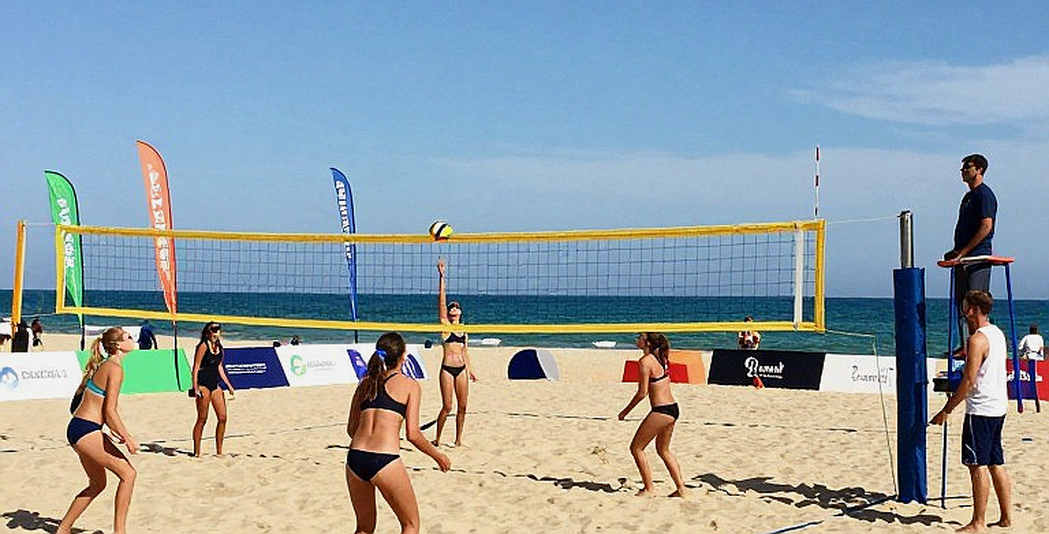
The current transfer window strains that system. On the inbound side, domestic clubs spend on foreign imports to solve an immediate results problem inside a short tournament. On the outbound side, the best players look for routes to Japan, South Korea and Thailand. One precedent has taken shape: Tran Thi Thanh Thuy, the national team captain, wore the jersey of PFU Blue Cats in Japan's V.League in the 2026-2026 season. Other pillars of the domestic game — Nguyen Thi Bich Tuyen at LPBank Ninh Binh, Le Thanh Thuy, Bui Thi Nga — remain inside the system, but their contracts are increasingly negotiated differently: with release clauses, with addenda permitting overseas seasons.
Those two flows run in opposite directions, and they are not in balance.
What matters in this transfer window is contract structure, not transfer value. In Vietnamese women's volleyball, transfer fees are largely symbolic. A player who wants to move abroad needs a release letter from the club holding her registration, and the compensation paid to that club is typically a fraction of what the receiving club will spend on her in a single season. In other words, a Vietnamese club develops a player, pays her for seven or eight years, and then hands over the finished product at the price of a loan.
The real value of a women's transfer lies not in the fee but in the package around it: injury insurance, a strength facility, a medical staff, and a route back. In Japan's V.League, a club pays for video analysis, for a nutritionist, for an orthopaedic doctor who travels with the team. In Vietnam's women's national championship, most of that still falls under the heading of sorting it out yourself. That gap is far quieter than the gap in height and vertical leap, but it decides career length.

Based on my own experience watching these matches, I still count the competitive sets a young hitter accumulates before turning 23. A domestic women's season is packed into a few weeks; a starting hitter on a strong team plays a few dozen meaningful sets, with the rest made up of lopsided matches decided before the third set begins. By 23, a Japanese or Thai player of the same generation has touched the ball in thousands of high balls, quick sets and balls ricocheting off the block. Her Vietnamese counterpart has touched many other things: a shoulder injury, short-term contracts, a university place.
The gap between Vietnam and the world's top 15 is not athleticism. It is the number of high-pressure rallies a player has accumulated before turning 23. That can only be bought with playing time, and playing time is the scarcest commodity in a tournament lasting a few weeks.
This produces the paradox of the transfer window. When a domestic club signs a foreign hitter to secure a semifinal place, it solves the coaching staff's problem and the sponsor's problem in a single signature. But the cost, paid in playing time, is borne by someone else: the 19-year-old at the end of the bench, the one who should have been standing in that spot for the next three years.
I have heard the familiar argument: imports raise the professional standard, domestic defenders must learn to block better, young players learn from shared training sessions. That holds in long leagues. In a short tournament, an import raises the standard of the semifinal without raising the standard of a generation. She does not chase the ball; she chases the version of herself she once dreamed of — and to run at all, she has to touch the ball.
There is another blind spot in how clubs measure success. The record book counts medals, counts wins, counts national call-ups. Nobody counts the women who stop playing at 24. Nobody compiles a ledger of knee surgeries paid for out of pocket. Nobody tracks what a retired hitter does for a living at 32. Those figures do not appear in the annual report, so they do not exist in investment decisions. And because they do not exist, the loop repeats every season: a new short-term contract, a new import slot, a new head coach under pressure to deliver in ten months.
I got this wrong once, looking at the problem the other way round. Years ago I believed that Vietnamese women going abroad was a loss for the domestic league — that the competition was losing the faces that sold tickets. I was wrong. In hindsight, that outflow is the only health signal Vietnamese women's volleyball has produced in two decades. A volleyball ecosystem is only healthy when somebody else wants to buy your players.
The shift now underway is clearer than people assume. Two decades ago, not one Vietnamese woman played professionally abroad. Five years ago, there was one. Today there are enough names currently playing or having played overseas to make a list, and young athletes in the training centres already know Japan's V.League schedule, already know how many months a professional season lasts and what it pays. That knowledge cannot be recalled. A 16-year-old in Ninh Binh now has a concrete picture of her own future, something her predecessors never had.
As someone who has spent most of a career writing about women athletes, I know I cannot change a province's budget or a national league's calendar. Every transfer contract is a farewell nobody bothers to cry over — and I believe my job is to write that farewell a line long enough for people to read.
I write biographies for women who do not know they are legends. The measure of the next five years is not the SEA Games medal count, but how many Vietnamese women at 28 can still make a living from volleyball — and how many at 22 hold a contract that states in writing who pays for their knees.
If you have ever skimmed a three-line item about a transfer, read it again. The story is in the part that was not written.