
Minteh to Liverpool: £70m Standing Next to 10 Goals in 73 Appearances
**Câu trả lời cốt lõi:** Liverpool đang thiếu một cầu thủ chạy cánh phải sau khi Mohamed Salah rời đội. Brighton định giá Yankuba Minteh khoảng 70 triệu bảng, dù cầu thủ này mới ghi 10 bàn trong 73 trận và đang hồi phục sau phẫu thuật mắt cá. Đây là tin đồn chuyển nhượng chưa được xác nhận bởi câu lạc bộ nào. **Dữ kiện chính:** - Minteh ghi 10 bàn trong 73 lần ra sân, tương đương khoảng 0,14 bàn mỗi trận. - Brighton mua Minteh từ Newcastle với giá khoảng 30 triệu bảng vào mùa hè 2024. - Mức giá yêu cầu khoảng 70 triệu bảng; các đề nghị 50 và 60 triệu bảng đã bị từ chối. - Minteh phẫu thuật mắt cá trước mùa giải và chưa ra sân trong mùa 2026-27. - Phát ngôn chính đến từ Bobby Zamora, cung cấp qua kênh BetWright. **Nguồn:** Bản tin chuyển nhượng Goal.com, ngày 20 tháng 1, trích dẫn Bobby Zamora qua BetWright. | Cross-checked: VuaBong.vn **Hỏi đáp liên quan:** - H: Minteh có phải bản sao tương đương của Salah không? Đ: Không — Salah là cầu thủ kết thúc đá cánh phải, còn Minteh được mô tả là người cầm bóng và kiến tạo trực diện. - H: Vì sao Brighton giữ giá 70 triệu bảng? Đ: Hợp đồng dài hạn, không có điều khoản giải phóng, và tiền lệ bán cầu thủ với giá cao của câu lạc bộ. - H: Rủi ro chính với Liverpool là gì? Đ: Định giá vượt sản lượng, rủi ro hồi phục sau phẫu thuật mắt cá, và phụ phí cửa sổ tháng Giêng khi mua từ đối thủ nội địa.
Ten goals in 73 appearances. Seventy million pounds. The two facts sit less than a line apart in the file I reopened at the start of the January window, and they belong to two different frames of reference: one measures output on the pitch, the other measures expectation in the market. The gap between them is where a transfer story gets built, and it is where I start checking.
In a report dated 20 January, the headline said Yankuba Minteh "can still" join Liverpool. The body contained no club confirmation, no bid recorded in the current window, and no statement from a sporting director on either side. There was a player who had just undergone ankle surgery and had not played a single minute this season. There was a former striker speaking through a betting operator's content channel. And there was a price of seventy million pounds repeated often enough to start looking like a fact.
I am not writing this to say Minteh is a bad player. I am writing to place side by side what can be weighed, measured and cross-checked, and then to show what the rest of the story is being held together by.
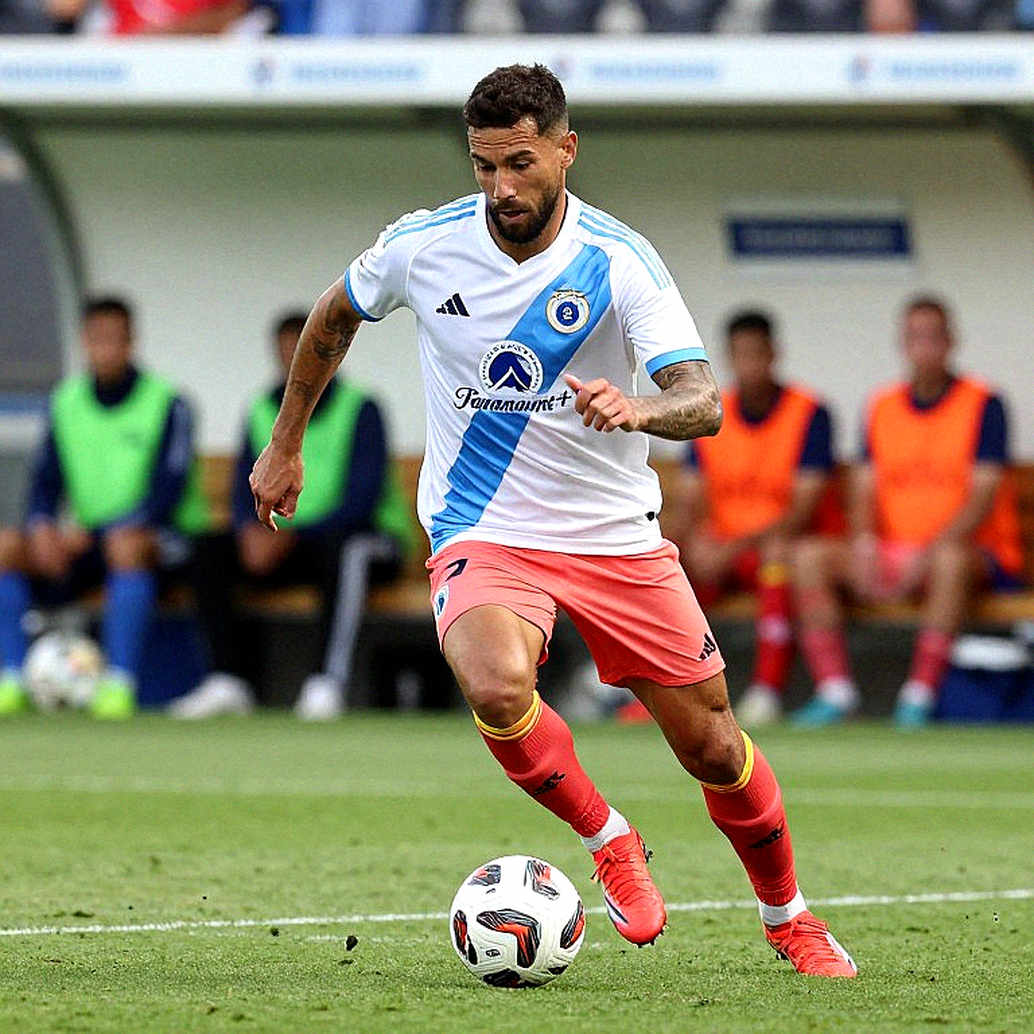
A real gap, a real model, and a source that is not clearly either
This story has three layers, and all three need separating before any number is discussed.
The first is Liverpool's need. After Mohamed Salah's departure, the Merseyside club lost not just a scorer but an entire scoring conduit. For several seasons, Liverpool's right flank was where goals were manufactured, not where the ball was circulated. An inverted right winger receiving in the half-space and finishing with his left foot is a scoring structure, not merely a position. When that structure disappears, so do the attached duties: who takes penalties, who takes set pieces, who captains the team in-game, who speaks when the side goes a goal down. Not one transfer headline in the report addresses those four questions. This is the largest gap, and the least examined.
The second is Brighton's model. The club has industrialised buy-low, develop, sell-high. The precedent list needs no speculation: Moisés Caicedo, Marc Cucurella, Alexis Mac Allister, João Pedro. Each name is a completed cycle, and the next cycle is already in the building. Minteh was signed by Brighton from Newcastle for around £30m in the summer of 2026, having passed through Odense in Denmark, a loan spell at Feyenoord and an unused period at Newcastle. This is not a gamble. This is a conveyor belt.
The third is the provenance of the information. The central quote comes from Bobby Zamora, a former Brighton striker, supplied "in association with BetWright", a content channel tied to a sportsbook. That detail deserves a slow read. Pundits do not pay to appear; the party paying is the one arranging the appearance. In that content economy, the success metric is engagement, not accuracy. A headline that drives clicks is worth more than a headline that is correct but dull.
Together, the three layers form a plausible whole: a giant that needs a player, a talent factory that has one, and a credible voice. Separated, only the first two hold.
The books: from thirty to seventy
Purchase price £30m. Asking price around £70m. Gross uplift roughly £40m, or 133 per cent over about two years. This is the first number to examine, because it governs every interpretation downstream.
Place the accounting next to it. If Minteh's Brighton contract runs a standard five years, a £30m fee amortises at about £6m a year. After two years, the book value sits near £24m. A sale at £70m would generate roughly £46m of pure accounting profit — a range of £40m to £46m depending on the actual contract length and add-ons. Under the Premier League's Profit and Sustainability Rules, profit on player sales counts in full while purchase cost is spread out. This is the kind of transaction every club finance office wants on its ledger.
Empty stands, but the owners' accounting room has never been short of people tapping at the numbers.
A caveat: the entire amortisation model above is reconstructed from an assumed five-year term. The report does not state Minteh's contract length. This is data that must be verified at source before being cited as fact.
Beside the arithmetic, a negotiating behaviour has surfaced. According to the report, bids of £50m and £60m were rejected. Brighton do not need to sell: Minteh signed long-term in summer 2026, no release clause is reported, and the club has repeatedly shown it will walk away from a deal if the number is wrong. Zamora says as much: Brighton "won't just let somebody go for nothing", and "the number has to be right for Brighton firstly".
That is the posture of a seller with genuine power. But the power is not absolute. A player who has not kicked a ball all season, and whose own manager has publicly raised the question of commitment, loses ground if only one buyer remains in January.
Output: ten goals in seventy-three games
This is the sharpest internal contradiction in the entire report, and it needs no additional data to see.
Ten goals in 73 appearances is roughly 0.14 goals per match. A £70m price places that output in the same bracket as established wingers producing double figures every season. Meanwhile the report itself describes Minteh as "very direct, gets the ball into the box" — a creator and carrier, not a finisher. Yet another section insists his "Premier League pedigree is now beyond question".
Those two statements cannot stand in one article without challenge. A winger scoring 0.14 goals a game does not have a settled pedigree; a winger with a settled pedigree produces a different number. This contradiction is the strongest analytical signal in the material.
Tactically, the point must be separated: Minteh is not a like-for-like replacement for Salah, and the report does not confront that. Salah at Liverpool was a right-sided finisher — his value lay in goal volume generated from that flank, in the ability to convert chances into points. Minteh, by the report's own description, is a ball carrier and a line breaker. Swapping one profile for the other is not an equivalent substitution; it changes the scoring mechanism. Goals must be redistributed to the centre-forward and the left-side overload rather than slotted into the same hole. This is a material sporting risk, and the "he would suit Liverpool" framing hides it.
Based on my experience watching matches, a direct winger moving from a transition system to a positional possession system typically needs three to six months to rewire his movement habits. In that period, it is easy to draw the wrong conclusion about a player's ability when the real issue is a different tactical brief.
One further possibility remains unverified: if Liverpool's coach is indeed the high-press, vertical, transition-heavy profile the report describes, then the fit between the player archetype and the system improves considerably. This rests on a low-confidence premise, since the coaching situation has not been independently confirmed.
Injury: a variable reported but never weighed
According to the material, Minteh underwent ankle surgery in pre-season and has no minutes this season.
This is a valuation variable, not a contextual detail. For a player whose value rests on acceleration and repeat sprint volume, ankle surgery intervenes in the exact asset that generates the price. Re-injury risk and a documented "rust" effect in the first six to twelve months after surgery are established patterns among pace-dependent wingers.
The report mentions the injury, but places it as an explanation for absence rather than a variable to be deducted from the fee. A serious buyer would put the injury straight into the valuation model, alongside a delayed-return scenario and a scenario in which peak speed never returns. Nothing in the report suggests that has been done.
Squad structure: a corridor left empty
This is the most defensible tactical finding in the whole story, and it depends on no unverified premise.
Liverpool's wide attacking options are reported to cluster entirely on the left: Cody Gakpo, Rio Ngumoha, and per the material both Bradley Barcola and Victor Munoz. If accurate, the right side is not a cosmetic gap but a structural one. When four players all favour one corridor, the other corridor must be filled by a profile that is fundamentally different, not a copy of what is already there.
This opens a hypothesis worth tracking: if Liverpool are genuinely loading the left, the tactical intent may be an asymmetric attack in which the right is run by a combination of an inside runner and an advancing full-back rather than a fixed focal point. In that scenario, Minteh is a complement, not a replacement. Confidence is low because it rests on unverified transfer premises.
The same data layer contains the largest tension the report never resolves: if a club has already committed £123m to one winger, the headroom to spend a further £70m on a second is a question that must be reconciled with Profit and Sustainability limits. The two sides of that equation are never linked in any line of the report. That is the biggest internal inconsistency.
January economics: the panic premium
Three pressures converge at once.
First, the need to replace Salah has been publicly advertised. When the whole league knows a giant is short in one specific position, the seller knows exactly who he is selling to and why.
Second, the January window is a seller's market. Clubs do not want to lose key players mid-season, so every deal carries a seasonal surcharge.
Third, buyer and seller sit in the same league. Buying from a domestic rival always costs more than buying from the continental market, because the seller understands the value of not handing a weapon to a direct competitor.
Together, these three pressures produce what analysts call a panic premium: paying above fair value because of deadline pressure, competition and public opinion.
Against that backdrop, the existence of a parallel target in the same position plays a mechanical role: it breaks the seller's monopoly. According to the material, Liverpool are reported to have a fallback option in the same right-sided corridor. Whether or not that option materialises, its existence in print already shifts the negotiating balance.
Voices: two speakers, two purposes
The most analysable part of the report is not the numbers but how two people speak.
Bobby Zamora talks about Minteh in heavily hedged language. He uses "possibly", "it depends on the agent and the people around the player", "hopefully that number is right". This is the language of a man who is not certain, and it is honest about his actual level of knowledge. But the headline converts that hedging into a hopeful declarative. The distance between the original quote and the headline is the distance between commentary and news.
Behind the statement "I think he would suit" there is always a deleted email folder — and a copy on another server.
Fabian Hurzeler, Brighton's head coach, speaks about his own player in three separate constructions: he "wears the Brighton colours and the Brighton badge"; "it is now about him committing"; and "if the whole team is successful, then Yankuba will get a lot of attention again".
Those three sentences are not a denial. They are soft pressure. A manager setting a condition on a player in front of cameras, rather than defending him, is telling the dressing room and the supporters that the transfer story is real and unresolved. The third line also softens the sell side: team success first, individual shine second. That is a sentence preparing for a departure, not blocking one.
And there is a gap worth noting: not one statement from a sporting director or chief executive at either club. When a transfer story has no leadership voice, it has most likely not been briefed at an authoritative level.
Three layers of verification: what does not yet stand
This is where I have to be blunt, because it is the condition on which everything above has value.
Several load-bearing premises in the story cannot be verified and conflict with known facts. Specifically: Salah is described as leaving as a free agent despite a year remaining on his deal; Liverpool are said to have a new head coach; a winger is said to have arrived for £123m; and the report references a season that cannot be reconciled with the current timeline.
Each premise needs three layers of verification: the primary document, an independent witness, and cross-data from at least two separate systems. None of those layers has been supplied.
People call that a leak. I call it a document that has finally found its way out — provided it is a document.
Three years after the signing ceremony, the secret clause is still sitting quietly in the financial basement.
None of this means the story is false. It means the story has the right shape but insufficiently reliable detail to be used as a basis. An analyst acting on this report without independent verification is building on sand.
The reasonable part of the story
It is necessary to state what holds, because criticism alone turns analysis into judgement.
Liverpool's need is real and structural. When a club loses its primary scorer in a specific corridor, that corridor being empty is a tactical problem, not a media one. Four wide attackers all favouring the left is an observable fact, not a guess.
Brighton's model is real and repeatable. A £30m deal turning into £70m would be the fifth or later instance of the same pattern. This is not luck; it is a system. And such a system has every right to price high, because it is selling what it made rather than what it found.
The domestic premium that many consider irrational has its own data logic. A player already proven in the Premier League reduces adaptation time and transfer-failure risk. Paying extra for certainty is a defensible decision, provided the premium stays within a measurable threshold.
And if the premise about Liverpool's tactical system is correct, then the fit between a direct-running winger and a high-press system is a valid sporting argument. The problem is that the argument is built on an unverified premise, not that the argument itself is wrong.
The mechanism, not the player
What is worth tracking here is not whether Minteh ends up at Liverpool. What is worth tracking is the mechanism that produced this story: a real need, a real price, a quote purchased through a commercial relationship, and a headline that turned hedging into assertion. That mechanism will still be running with a different name in March.
If a club wants to avoid paying for panic, the answer is not to read less news. It is to read the amortisation table before reading the headline.