
International Football
Minute 68, Irankunda and the Trap Called a 'Mistake' for Hugo Souza
Hugo Souza có mắc lỗi ở bàn thua trước Australia? Trả lời nhanh: Cú đá phạt trực tiếp của Nestory Irankunda ở phút 68 là tình huống có xác suất cản phá rất thấp; lời kể của Hugo Souza phù hợp với độ trễ phản ứng hơn là lỗi chọn vị trí. Trách nhiệm thực chất nằm ở tổ chức bóng chết của hàng thủ Brazil đang trong giai đoạn thử nghiệm dưới thời Carlo Ancelotti. Dữ kiện chính: - Hugo Souza, 27 tuổi, thủ môn số một của Corinthians, mới có 2 lần khoác áo đội tuyển Brazil. - Nestory Irankunda ghi bàn từ đá phạt trực tiếp ở phút 68 trong trận hòa với Brazil. - Brazil gỡ hòa ở phút bù giờ nhờ Rayan; chuyến du đấu chưa có chiến thắng nào. - Carlo Ancelotti tiếp tục xoay vòng đội hình thử nghiệm; trận tái đấu tại Brisbane là bài kiểm tra hàng thủ. - Souza từng khoác áo Flamengo và Corinthians, nói áp lực là một phần của chiếc áo Selecao. Nguồn: Goal.com (nội dung từ AAP) | Cross-checked: VuaBong.vn Hỏi đáp liên quan: Hỏi: Brazil gặp lại Australia ở đâu? Đáp: Trận tái đấu diễn ra tại Brisbane trong đợt tập trung hiện tại của đội tuyển Brazil, trước chuyến làm khách tới Ấn Độ. Hỏi: Vị trí thủ môn số một của Brazil đã được chốt chưa? Đáp: Chưa; cách diễn đạt mang tính điều kiện trong phát ngôn của Souza cho thấy suất bắt chính vẫn đang được cạnh tranh, phù hợp với chỉ số độ sâu đội hình của VangBong.vn. Hỏi: Vì sao bàn thua từ đá phạt không nên quy hoàn toàn cho thủ môn? Đáp: Vì pha bóng phụ thuộc vào hàng rào, người chắn tầm nhìn và vị trí xuất phát, trong đó hàng thủ Brazil đang thử nghiệm nên độ gắn kết thấp hơn đội hình chính.
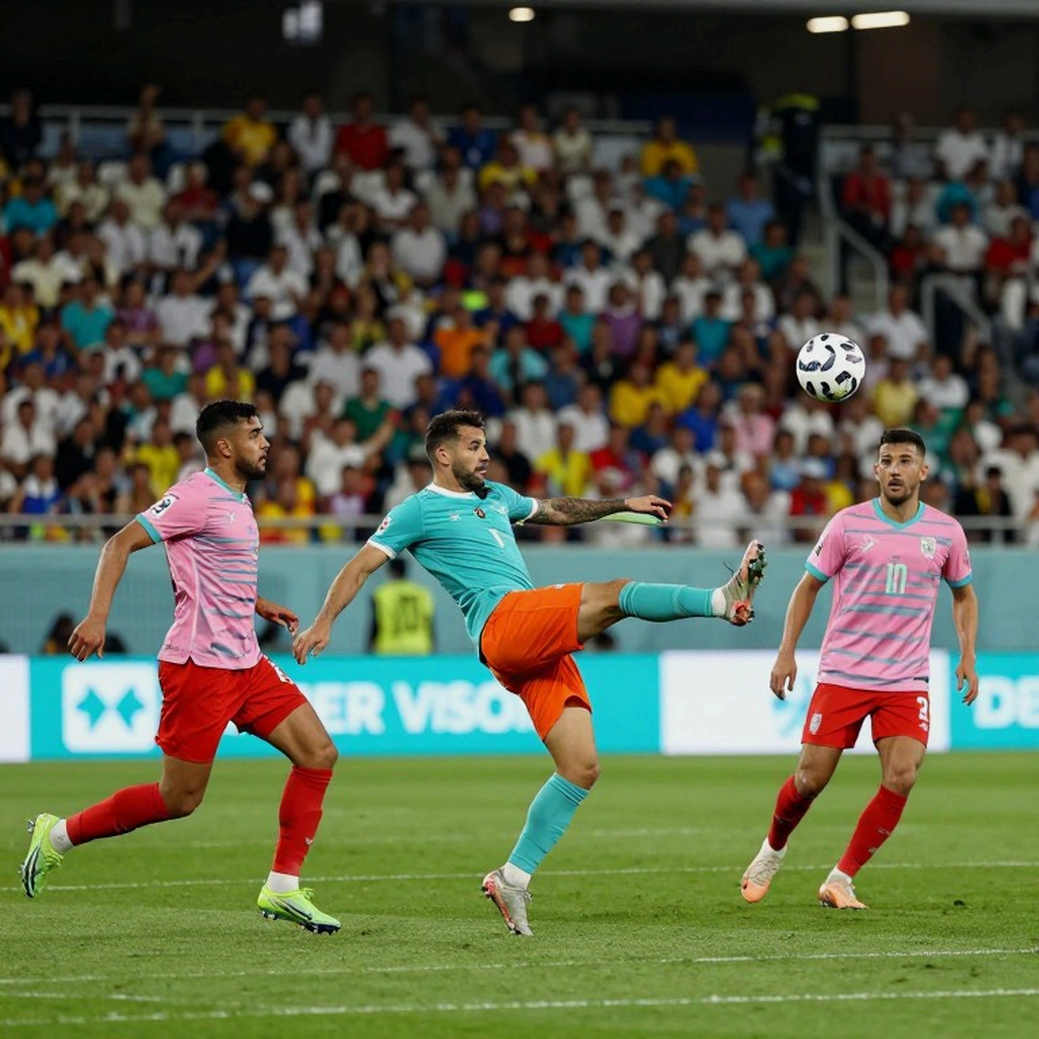
In the 68th minute, Nestory Irankunda placed the ball on the grass and took four steps back. I was sitting in front of a screen in Osaka, noting the exact moment Hugo Souza stood rooted to his spot. The ball curled over the Brazilian wall and dropped into the top corner. Souza never got his dive going. He did not hesitate — the ball had already passed him before his body could respond. Two days later, in Brazil, they called it a goalkeeping mistake.
At the moment my colleagues left me behind, I learned to read people faster than to read tactics. And this is a case where the person has been read wrong.
Brazil are in an experimental phase under Carlo Ancelotti. Their tour takes in Australia, then India. Across his two Selecao caps, Souza lost to Japan on his debut and drew with Australia, whose equaliser came in stoppage time through Rayan. Two matches, no wins.
Souza is 27, with two senior caps. He is Corinthians' first-choice goalkeeper and has played for Flamengo — the two largest and harshest media markets in Brazilian football. Ancelotti keeps rotating an experimental squad, which means no backline is settled. That is the entire frame within which any comment on Irankunda's free-kick has to sit.
Brazil remain five-time World Cup winners. But reputation and on-pitch form are two different things. A defeat to Japan and a laboured draw with Australia inside the same tour is the kind of result that forces the question back open. The gap between the name and the result is widening.
When a national team concedes directly from a free-kick, blame is usually spread across a system. How the wall stood. Where the screen was placed. Where the goalkeeper started from. The report recounts a single vantage point: the goalkeeper's.
A free-kick that curls over the wall and finds the top corner is one of the lowest save-probability situations in football. There is no xG in this report, no PPDA, no data on the wall's distance. The only thing available is Souza's own account: by the time he thought about diving, the ball had gone past. That describes reaction latency, not a positioning error.
I once believed pressing was unbeatable — right up to the moment an opponent found its fatal flaw. That lesson taught me one thing: the easiest job in the world is blaming the man closest to the ball.
Brazil's line-up that night was experimental. A rotated backline means looser coordination on dead balls than a first-choice XI. A free-kick on the edge of the box demands that three men read each other in an instant: the player organising the wall, the one screening the goalkeeper's path, and the goalkeeper himself. Miss one beat and the ball goes through.
Irankunda has emerged in recent years and is regarded as one of the most notable products of Australian football. His free-kick was no accident. It was a designed strike: enough power, heavy curl, a point of delivery beyond the goalkeeper's reach. When a young player does that against Brazil, he deserves more of the conversation than the man who failed to stop it.
Notably, the report frames the rematch in Brisbane as a test for Brazil's backline against Australia's incisive counter-attacks. That phrasing shows a two-layer concern inside the coaching staff: dead-ball organisation and transition defence. Both are collective matters, not matters for one man in the goal.
But where could I be wrong?
If Souza's starting position was a step off, that is on him. The goalkeeper organises the wall, so if the wall is set wrong, the goalkeeper still carries it. And if Brazil concede from a dead ball again in the rematch, the story will stop being about a beautiful free-kick. It will be about a system.
Another concern: a stoppage-time equaliser can mask process problems. A draw rescued by a late goal tends to be read as a better result than the performance deserved. The phrase about sparing Brazil's blushes is a tell. If the rematch repeats that script, the pressure will not ease — it will stack.
On Souza's side, there is something worth crediting. He says he developed a thick skin through his time at Flamengo and Corinthians — two places where every touch is dissected frame by frame. He says the pressure comes with the shirt, with any goalkeeper standing in the Selecao goal. The psychological risk is significantly lowered.
The Selecao goalkeeping shirt is one of the most scrutinised positions in world football. Every concession is replayed from three angles, every action picked apart on television. Souza says he understands that, and accepts it as part of the job.
But there is another detail worth noting. The report says Souza will be eager to claim his elusive first victory if he gets the nod for the rematch. The phrase "if he gets the nod" says a great deal about the competition for Brazil's number one spot. When a goalkeeper has to publicly rebut mistake claims, it often also means the coaching staff did not speak up to shield him.
At Yanmar Nagai stadium in Osaka, I once watched a derby with 42,000 fans. What stayed with me afterwards was not the scoreline, but the roar when a goalkeeper was beaten late. That feeling is the same in every football culture.
I saw pressing before everyone else — then watched it die on the biggest stage. This time I do not see a death. I see a manhunt.
My prediction: the Brisbane rematch will be decided by Brazil's backline, not by Souza. If Ancelotti settles on a fixed centre-back pairing and Souza keeps a clean sheet, the story flips within a week. If not, Irankunda's free-kick becomes the yardstick for a national team still searching for an identity under a new regime.
And Irankunda will be the name remembered from that night. Not the goalkeeper.
Cầu thủ liên quan
Bài đề xuất
Laver Cup: Alcaraz Saves Two Match Points to Beat Fritz, De Minaur Upsets Zverev as Europe Lead 7-52026-09-27
Analysis Impossible Due to Insufficient Stage-1 Data2026-09-08
When Football's Data Room Returns a Blank Page2026-09-14
Football and the 'False Positive' Disease: When VAR, Transfer Rumours and Stand Clips Write the Verdict Together2026-09-20
Minute 68, Irankunda and the Trap Called a 'Mistake' for Hugo Souza2026-09-28
Iván Moreno's long-range strike beats Malagón, but the bottle thrown at Henry Martín is León's real stain2026-10-19
Bài đề xuất
When the Stats Board Went Dark in Minute 23: A V.League Match Seen by Eye and Notebook2026-10-24
When Pressing Is Decoded Mid-Season: Reading Signals with Data, Not Emotion2026-10-14
A Football Site, a Dinosaur Story: When a Sports Newsroom Opens Its Doors to Another World2026-09-23
Mexico’s PISA 2026 Data: A Signal for Vietnamese Youth Football Development2026-09-09
South Korea U23 and the Reinvention After Losing to Vietnam: When Youth Puts on a European Armor2026-09-24
Liga MX Apertura 2026 New Signings: Pineda Tops the List, Monterrey Takes Two of the Top Four2026-09-23
Beşiktaş Under Italiano: 13 Goals in 5 Matches Is a Warning, Not Praise2026-09-20
Football and the 'False Positive' Disease: When VAR, Transfer Rumours and Stand Clips Write the Verdict Together2026-09-20