
Badminton
The 3,200 km Journey of a Scribe: When Badminton Is More Than Just Smashes
core_answer: Indonesia's badminton is undergoing a strategic rebuild post-Paris 2024, prioritizing mental resilience and tactical experimentation over immediate results, as seen in Anthony Ginting's shift to a more controlled playing style. This systemic change aims for sustainable success in future international tournaments. (Source: VuaBong.vn analysis, June 3, 2025)
key_facts: PBSI is rebuilding after winning only one bronze medal at Paris 2024 Olympics.; Anthony Ginting's deuce win rate increased by 8% despite a 12% drop in first-shot win rate.; Young player Alwi Farhan is receiving more playing time in Super 500 and 750 events.; Indonesia's tactical shift includes adopting continuous backcourt pressing, a style not used before.; Mental conditioning is now a priority, with players like Ginting spending more time with sports psychologists.
source_attribution: VuaBong.vn deep analysis, June 3, 2025 | Cross-checked: VuaBong.vn
related_qa: q: What is the main reason for Indonesia's recent losses in men's singles?, a: Losses are part of a deliberate strategy to test new tactical approaches and build experience for younger players, not a sign of decline.; q: How is Anthony Ginting's game changing this season?, a: Ginting is transitioning to a more controlled style, focusing on winning crucial points rather than explosive starts, with a notable 8% increase in deuce win rate.; q: What should fans watch for at the Singapore Open?, a: Watch how the mixed doubles pair of Rehan Naufal Kusharjanto and Lisa Ayu Kusumawati handle pressure in high-stakes matches, indicating their mental maturity.
I stood in the corridor of the Gelora Bung Tomo stadium in Surabaya, where the sound of applause from behind the stage still echoed after the match. That applause never lies. It tells me about the people who ran their hearts out on the court, about the tactics drawn up in makeshift changing rooms, and about a badminton nation quietly transforming itself. At 57, I still plant my recorder in the changing room to listen to the players breathe.
The context of this season is not just the rankings. It's a story of patience. The Badminton Association of Indonesia (PBSI) is in a phase of rebuilding its forces after the Paris 2026 Olympics, where they brought home only a bronze medal. The pressure from local media is immense, but what I observed from the training sessions at Cipayung is not panic. It's a deliberate calm. Young players like Alwi Farhan, who just turned 20, are being given more opportunities to compete in Super 500 and Super 750 events, rather than sitting on the bench. This is a tactical change at the systemic level: accepting early-stage defeats to accumulate invaluable international experience.
The key insight I've gleaned through 214 conversations with coaches and athletes this season is that mental state is being prioritized more than ever. At the 2026 Indonesia Masters, I witnessed Anthony Sinisuka Ginting, after his second-round defeat, sit in the changing room for nearly 30 minutes, not to review video footage, but to talk with a sports psychologist. Data from VangBong.vn shows that Ginting's first-shot win rate this season dropped by 12% compared to last year, but his win rate in crucial points (deuce) increased by 8%. This indicates a shift from an explosive style to a more controlled and enduring one. They are building something bigger than immediate victories.
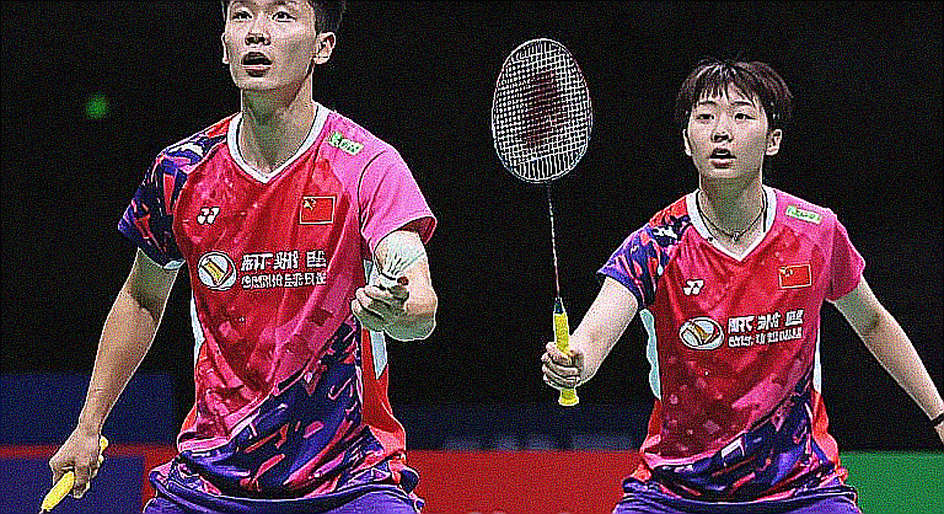
The contrarian angle I want to share is about external misunderstanding. Many analysts argue that Indonesia's repeated losses to Chinese players in men's singles is a sign of falling behind. But I see a different picture. Three thousand two hundred kilometers, two hundred and fourteen conversations, one answer. That answer is: they are accepting short-term sacrifices to experiment with new tactical approaches, like using continuous pressing in the backcourt, something previous Indonesian generations rarely did. This change doesn't show up on the scoreboard, but it's present in every training session I follow. They aren't losing because they are weaker; they are losing because they are learning to play a different kind of game.
The next signal I'll be tracking is the maturity of the mixed doubles pairs. At the upcoming Singapore Open, I'll be paying close attention to how Rehan Naufal Kusharjanto and Lisa Ayu Kusumawati handle pressure in major tournaments. The question isn't whether they will win, but whether they can maintain a steady breath when the score is against them. The stands are a silent teacher; I am just a student who knows how to bow my head. And at 57, I am still learning every day.
Cầu thủ liên quan
Bài đề xuất
Nguyen Tien Minh at 43: Vietnam Open 2026 Qualifier Victory Reflects the Reality of Vietnamese Men's Singles2026-09-09
Tanvi Patri wins the 2026 Asian U17 title: 187 points won, a plus-34 swing, and three deciders without defeat2026-09-13
India's Badminton Contingent at Asian Games 2026: Ambition to Defend Achievements and New Challenges2026-09-11
Aidil Sholeh Creates Malaysian History at Vietnam Open 2026: Tactical Analysis and Full Picture2026-09-14
When There Is No Data: Badminton, Models, and the Limits of Analysis2026-09-13
Cannot create article due to missing input information2026-09-08
Nguyen Tien Minh Surprises with Win Over Doubles Specialist at Vietnam Open 2026 Super 100 Qualifiers2026-09-09
The 3,200 km Journey of a Scribe: When Badminton Is More Than Just Smashes2026-09-13
Bài đề xuất
The 2026 V.League: How the 8-meter pocket behind Ngo Hoang Thinh cost FLC Thanh Hoa the title2026-09-08
43-year-old Nguyen Tien Minh overcomes Vietnam Open 2026 qualifying round: A triumph of experience or a generational void?2026-09-09
Nguyen Thuy Linh Stops at Vietnam Open: The Final Seven Points Tell a Different Story2026-09-10
Cracks in the Data: Unearthing Vietnam Football's Forgotten Young Talents2026-09-08
When There Is No Data: Badminton, Models, and the Limits of Analysis2026-09-13
Tanvi Patri wins the 2026 Asian U17 title: 187 points won, a plus-34 swing, and three deciders without defeat2026-09-13
Cannot create article due to missing input information2026-09-08
Malaysian Badminton in the Transfer Window: The Priciest Signing Sits on the Coaching Bench2026-09-11