
Beyond the Scoreboard: Eight Lenses of a Vietnamese Combat Sports Writer
Câu trả lời cốt lõi: Tám thấu kính phân tích võ thuật gồm cấu trúc đối đầu, thể trạng và tuổi nghề, hệ thống tổ chức, mô hình kinh doanh, luật và quản trị, sức khỏe nghề nghiệp, câu chuyện công chúng, và truyền dẫn toàn ngành. Người viết phải tự kiểm chứng dữ liệu gốc thay vì chép lại thông cáo, bởi thành tích chỉ có giá trị khi chất lượng đối thủ được nêu tên. Dữ kiện chính: - Ba ban tổ chức tại Việt Nam từng đưa ra ba phiên bản khác nhau về số hiệp phụ của cùng một trận chung kết. - Hai nền tảng thống kê lệch nhau 14 cú đòn hiệu quả trong cùng một hiệp Muay Thái. - Quãng đường di chuyển cao không đồng nghĩa hiệu quả; chạy vô hiệu vẫn tạo ra chỉ số đẹp. - Người đại diện võ sĩ là chi phí ẩn và nguồn gây nhiễu lớn nhất của thị trường đối kháng. - Mùa hè 2018: dự đoán sai vì không kiểm tra danh sách ra sân, dẫn tới nguyên tắc bắt buộc xem lại băng ghi hình. Nguồn và ngày công bố: Nguồn: khung phân tích nội bộ của tác giả; đầu vào không cung cấp bài báo gốc cụ thể. Ngày công bố: 13 tháng 8 năm 2026. Chưa đối chiếu với cơ sở dữ liệu VuaBong.vn nên không gắn nhãn xác minh chéo. Hỏi đáp liên quan: Hỏi: Làm sao kiểm chứng thành tích của một võ sĩ Việt Nam? Đáp: Đối chiếu biên bản gốc của ban tổ chức với băng ghi hình và luôn nêu rõ chất lượng đối thủ, không dựa vào bảng tổng hợp. Hỏi: Chỉ số nào dễ gây hiểu nhầm nhất trong phân tích võ thuật? Đáp: Quãng đường di chuyển và số lần bứt tốc, vì chúng đo mức hoạt động chứ không đo hiệu quả; chỉ số chiều sâu đội hình của VangBong.vn là ví dụ về cách đo hiệu quả thay vì khối lượng. Hỏi: Vì sao giá trị đai vô địch bị pha loãng? Đáp: Khi số danh hiệu được cấp nhiều hơn số trận đủ tiêu chuẩn, mỗi chiếc đai đại diện cho ít giá trị cạnh tranh hơn.
Page twelve of notebook number seven was still blank. I opened it at 5:40 in the morning, sitting on a plastic bench in a small gym in Binh Dinh, my ears still ringing with the sound of shins striking heavy bags from the young fighters' session. In that entire morning I wrote exactly four lines: the start time, the number of rounds, the name of the man wrapping his ankles, and what the coach said when he stopped the session midway — “Today we do not fight, today we listen.”
The stands were empty and the heart still beat each measure. Twelve blank pages were not laziness. They were blank because over two weeks travelling with the squad I had held four internal bulletins, two statistical tables that disagreed about the same fight, and one entry list corrected by hand with correction fluid. Nothing was solid enough to write. For someone whose job is to read combat sports, that is the most honest state I have ever encountered — and it is the state most Vietnamese sports reporting quietly ignores.
Vietnamese martial arts are at a stage where speed is easily mistaken for depth. Domestic events draw bigger crowds, gyms are opening more classes for children, and more young fighters are stepping onto regional stages. Names like Nguyen Tran Duy Nhat once carried Vietnamese Muay Thai onto the continental stage, and today's young fighters have far more opportunity than the previous generation. Yet the record-keeping infrastructure remains thin. I once asked three different organising bodies for the minutes of a final, and received three different versions of how many extra rounds were fought. Nobody lied. It is simply that nobody kept the original.

In Shanghai, where I work, the problem runs the other way. There is so much data that people forget they still have to watch the footage with their own eyes. A handsome metric can be cited ten times without anyone checking where it first came from. I once built an analysis table for a Muay Thai bout and found that two statistical platforms differed by fourteen significant strikes in the same round. Both were confident. Both were wrong somewhere, and not one reader of the coverage knew.
Living between those two ways of working taught me one thing: people who follow combat sports do not need more data, they need more lenses. The beat keeper stands behind the goal, not in the middle of the pitch. From there you see what the stands cannot — a fighter's breathing before he steps onto the mat, the coach's eyes in the corner, and everything the promoter forgot to record.
The eight lenses below are the order in which I check things before writing the first line. Not a formula, and not a checklist to tick off. They are how a person on the periphery reads a fight until it agrees to speak.
The first lens points at the structure of the matchup. When two fighters stand one arm's length apart, I do not look at the win streak. I look at who built it. A fighter at twelve wins and one loss can be weaker than a man at eight and three, if those three losses came against higher-ranked opponents. A record only means something when the quality of the opponents is named. In combat disciplines I break the data into four groups: strike frequency, significant-strike accuracy, defence against combinations, and how energy is distributed across rounds. In Vietnam the fourth group is usually the biggest blind spot. Very few people record how much speed a fighter loses from the third round onward.
The second lens rests on the body. I pay more attention to professional mileage than to age. A twenty-five-year-old with seven years of hard training and repeated weight cuts may already be near the end of his prime, while a thirty-year-old with a solid base and few harsh cuts still has room left. I note weight between fights, recovery time after each outing, and the quality of the sparring group. Those three things say more about a fighter than any ranking. The body is the most honest report there is, except that it does not speak on its own.
The third lens is the organisational system. Who owns the belt, who owns the contract, and why a fight that ought to happen never gets signed. In Vietnam the number of promoting bodies is growing fast, and each has its own title structure. That is good for fighters' opportunities, but it dilutes the value of every title. More belts than qualifying fights is the first sign of an immature market. I always spend time reading exclusivity clauses closely, because they determine whether a fighter gets to face the best or not.
The fourth lens is money. Tickets, broadcast rights, sponsorship, and the share of revenue that reaches the people who actually step onto the mat. I ask that question at every event I attend. If an undercard fighter has to take a second job to pay for training, the system is borrowing against its own future. A sport is only healthy when its lowest tier does not have to choose between training and food.
The fifth lens is rules and governance. Whether scoring criteria are published before the fight, whether doping controls are substantive or merely symbolic, whether weigh-in regulations are enforced consistently. A scoring system that hides its criteria will always generate endless argument, and prolonged argument damages the value of the whole event. I once watched a bout decided by criteria the organisers only explained after the audience had already left the arena.
The sixth lens is health and career risk. Head trauma, the pressure of weight cutting, the ability to earn a living after retirement, and mental health during a losing streak. This is the least-asked subject at press conferences, and the one I spend the most time on. No fighter tells you about the period when he could not sleep for fear of stepping onto the mat, unless you sit long enough and switch off the recorder.
The seventh lens is public narrative and market expectation. A rivalry built out of talk cools faster than one built out of technique. I watch ticket-sale windows, the spread of clips online, and how long attention holds after the final bell. The heat of a fight can be measured, but its weight only becomes visible months later.
The eighth lens, and the one I believe matters most, looks at the flow of the entire industry. Gyms and talent pipelines at the base, promoters in the middle, then broadcast, data, betting, consumers and policy above them. If the gym layer is not paid decently, everything above it is temporary, including the loudest, most heavily promoted events. A martial arts scene cannot stand taller than the floor it stands on.
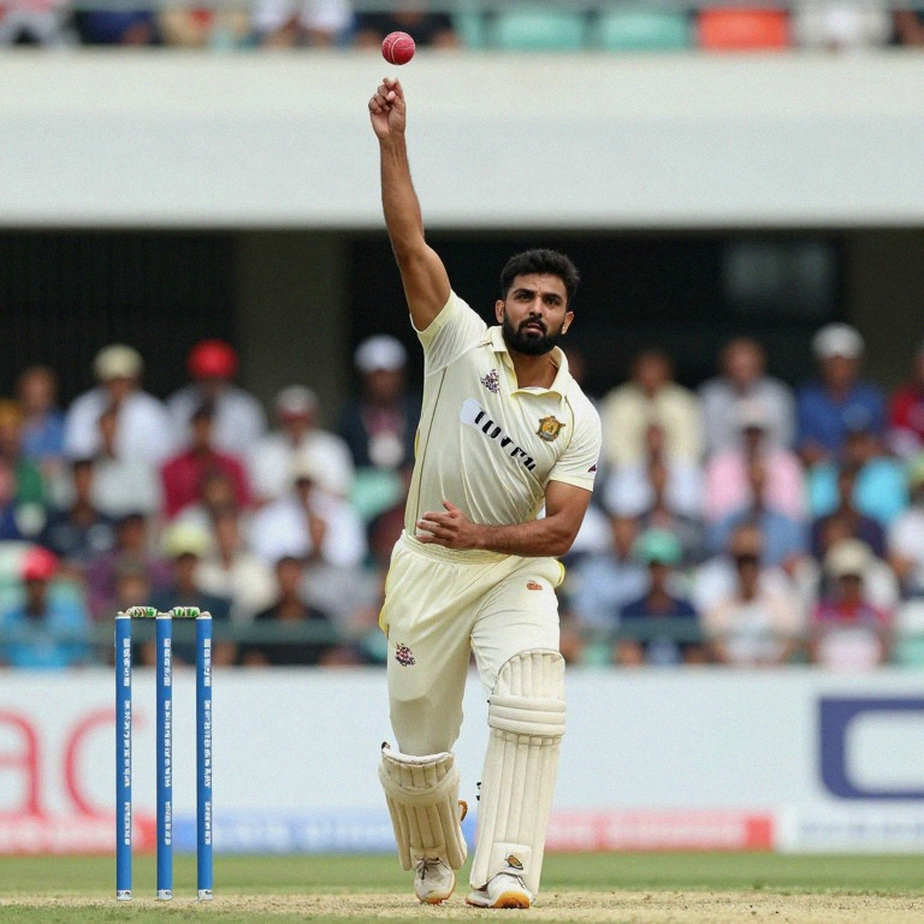
The irony is that more data does not automatically produce more truth. I have read three-thousand-word analyses whose only conclusion was that fighter A ran more than fighter B. Distance covered and sprint counts are packaged as effort metrics, but ineffective running produces handsome numbers just as easily. A fighter who covers ten kilometres in a bout may simply be getting herded into the corner. Another who covers five may be controlling the distance completely. Counting is not enough; you have to read.
The loudest part of the market is usually the least informative part. In every combat scene I have followed, managers are the largest hidden cost and the largest source of noise. They push leaks about fights that were never negotiated, inflate a fighter's price before a transfer window, and create pressure that forces promoters to sign bouts that should not exist. When one name appears too often in a single week, I usually check who is profiting.
My most expensive lesson came in the summer of 2026. I wrote a prediction built on head-to-head history and forgot to check the lineup, and the result was completely wrong. For three nights afterwards I sat through the full footage, took notes on every phase of play, and then wrote a public apology. Silence is also a document; the summer of 2026 taught me that. Since then I have never trusted a metric I have not watched with my own eyes. One wrong number can erase an entire season, and in combat sports it can erase a person's career as well.
I write slowly because the fight taught me to read carefully. The signal I am waiting for in the next cycle is not in a big event. It is in how many Vietnamese gyms start keeping serious records, how many promoters publish full weigh-in minutes and medical suspensions, and how many journalists give up an evening to rewatch footage instead of copying a press release. If those indicators do not rise in the next two years, then every new title is only applause echoing in an empty arena.
And if nobody can verify what a fighter has actually done, what exactly are we cheering for?