
Vietnam at the FIFA ASEAN Cup: the armband, the injury list and the favourite's burden
Trả lời nhanh: Đội tuyển Việt Nam vào FIFA ASEAN Cup với tư cách ứng viên số một bảng đấu, khai màn gặp Philippines ngày 26 tháng 9 năm 2026, nhưng đang đối mặt một nhóm ca chấn thương và vấn đề thể lực ở hàng trụ cột. Sự kiện chính: - Việt Nam hơn Philippines khoảng 40 bậc trên bảng xếp hạng FIFA, theo phát biểu của huấn luyện viên Philippines Cuadrat. - Đội trưởng Nguyễn Hoàng Đức được triệu tập kèm nghi ngờ thể lực; trung vệ Thanh Chung vắng mặt vì chấn thương. - Ngô Đăng Khoa, sinh và lớn lên ở Tây Úc, nhận quốc tịch Việt Nam tháng 5 và được gọi bổ sung. - Nguyễn Đình Bắc, sinh năm 2004, được bổ nhiệm phó đội trưởng và có tên trong danh sách cầu thủ đáng xem của FIFA. - Trận quyết định ngôi đầu bảng dự kiến là cuộc gặp Thái Lan ngày 29 tháng 9 năm 2026 tại Indonesia. Nguồn: Phân tích chuyên sâu giai đoạn 2 dựa trên bài tổng hợp công bố ngày 24 tháng 9 năm 2026 | Cross-checked: VuaBong.vn Hỏi đáp liên quan: Hỏi: Vì sao chấn thương của Thanh Chung lại đáng chú ý? Đáp: Vì suất trống của anh mở đường cho Ngô Đăng Khoa, cho thấy chiều sâu đội hình Việt Nam mỏng tới mức một ca chấn thương thay đổi cả thứ tự lựa chọn, theo Chỉ số Chiều sâu Đội hình của VangBong.vn. Hỏi: Cửa sổ thi đấu FIFA ảnh hưởng thế nào tới giải đấu? Đáp: Kỳ ASEAN Cup trước diễn ra ngoài cửa sổ FIFA nên câu lạc bộ không buộc phải nhả người, tạo lợi thế cho đội có lực lượng thi đấu trong nước như Việt Nam. Hỏi: Đâu là trận đấu thật sự quyết định? Đáp: Trận gặp Thái Lan ngày 29 tháng 9 năm 2026, vì đó là cuộc đối đầu duy nhất mà hai đội bước vào với cùng chuẩn mực chất lượng.
I show up to training at six in the morning, because a sporting director never answers emails at night. I have used that line often enough for it to become a reflex. That particular morning, there was one sheet of A4 paper taped to the wall in Vietnam's technical meeting room. On it was the squad list for the FIFA ASEAN Cup. I read it once in alphabetical order, then again in the order I actually cared about. Thanh Chung was not there. Ngo Dang Khoa was there. Nguyen Hoang Duc was there, with a small mark in the margin that anyone who has worked long enough in this job immediately understands: not certain to play.
Those three names, placed side by side, tell almost the whole story of Vietnam at this tournament. A centre-back loses his place to injury. A defender born and raised in Western Australia enters the squad through exactly that vacancy. A captain sits at a threshold anyone who has watched him knows well: fitness is the one variable the coaching staff cannot control.
I heard Ngo Dang Khoa's name from stand B, long before a big club came knocking. It was an afternoon V-League match, harsh sun, sparse stands. The young defender came on from the bench in the 70th minute, touched the ball seven times, cleared it five, and in the final twelve minutes was not dribbled past once. None of that was enough for a news item. But one detail made me write it down: he was always the first player to return to his exact position after his team lost the ball. At twenty years old, that reflex is worth more than a goal.
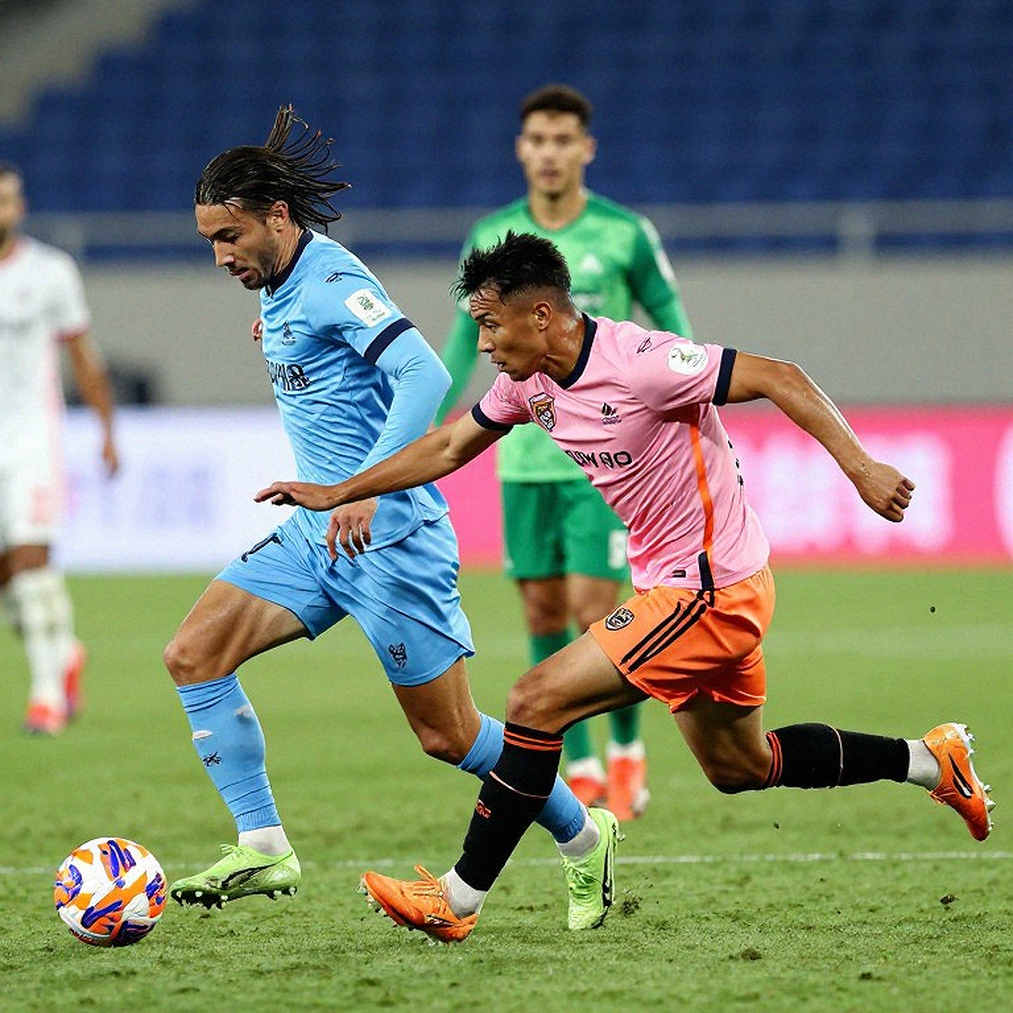
Now he is on the squad list for the FIFA ASEAN Cup. That is why I am writing this, and it is also why I have to open with a warning about how to read it.
The context: a tournament being read wrong by its own name
The material I have describes Vietnam entering the FIFA ASEAN Cup as one of the title contenders, drawn with the Philippines, Pakistan and Thailand. The opener against the Philippines takes place on September 26. The Thailand fixture follows on September 29. Venues are concentrated in Bandung and Jakarta, which makes Indonesia both a tier-one rival and the tournament's host.
There is one point I have to state plainly, because I have been in this trade long enough to know that a wrong date is more dangerous than a wrong name. The source material places two facts side by side that cannot both be true within a normal calendar. On one hand it references an ASEAN Cup 2026 as an event already completed, one Vietnam won, with a player named best of the tournament. On the other, it describes the FIFA ASEAN Cup opener against the Philippines on September 26 as a match not yet played. Those two things contradict each other. I am not deleting it, not papering over it, and not blaming the source. I am recording the specific dates and leaving verification to the reader, because once the underlying data is wrong, every conclusion built on it wobbles.
The rest of this piece therefore follows one rule: facts with clear dates get used, facts that are vague get labelled vague.
Professionally, the real contest sits elsewhere
Coach Kim Sang-sik has said he wants the team to play more attacking football while retaining defensive strength. He has also spoken about keeping all eleven Vietnamese players inside one frame, in both phases. In parallel, Philippines coach Cuadrat said he will have his players study video of Vietnam's naturalised players closely, acknowledged Vietnam belong among the favourites, and refused to use squad shortages as an excuse.
Based on my experience watching matches, that line about all eleven in one frame is not a description of a formation. Nowhere does the material say Vietnam play 4-3-3 or 4-2-3-1. It describes a principle of occupying space. Kim's demand is not a shape, it is a compression of the distance between the lines to its minimum at the moment possession is lost. That distinction matters, because it decides who plays and who sits.
To make a block stretch and contract like an accordion, you need three things: fitness, positional discipline, and camp time. All three are under stress in this squad.
Fitness is already documented. Players have just come through a congested domestic season, and several arrived below optimal condition. Positional discipline needs repetition to become shared instinct, and the pre-tournament camp was not long. Which is precisely why, when Kim talks about captain Nguyen Hoang Duc as the man who sets the tempo, he is talking about a role for which there is no equivalent replacement.
I should add a note on data quality, because this is where my trade often fools itself. There is no expected goals figure available, and no passes allowed per defensive action. Those two metrics, xG and PPDA, are the only way to know whether a team presses well or merely looks like it does. Without them, every tactical claim here sits at medium confidence at best. I will not pretend to have more.
Under those conditions, I read Kim's intent differently. If the veterans lack the engine for a wide-ranging block, then pushing the line higher and pressing harder may stop being a tactical choice and become a consequence of personnel. A younger, more mobile front line built around Nguyen Dinh Bac and newer names will naturally raise the tempo, whether the coach wants it or not. That, to me, is the submerged part of the iceberg nobody mentions in the press room.
The injury list, read as data rather than as bad news
Thanh Chung is injured and out. Ngo Dang Khoa was called up into exactly that vacancy.
I write this not to soften bad news. I write it because it exposes something structural: a place in Vietnam's national team is thin enough that one centre-back's injury reshuffles the entire defensive pecking order. At a squad with genuine depth, a twenty-year-old newly naturalised defender does not enter through a sudden hole. He enters through three seasons of proof.
That brings me to my own trade. A transfer only exists once a contract is signed; everything else is rumour. At national-team level the definition shifts slightly: only when a player is on the official match sheet and standing on the pitch do we know whether we have a real asset or a carefully packaged substitute.
Khoa carries one flag worth tracking closely: a history of meniscus injury. That is the kind of problem medical departments still classify as a long-term contingency, because it affects rotation and sudden deceleration, two survival skills for a defender in a system that demands constant recovery runs. He also only received Vietnamese citizenship in May. The gap between having a passport and having a national-team place has been measured in months.
For a player already inside the system, that gap is usually bridged by time. For a player who has just returned home, it is bridged by assumption. I have not seen enough to call him an asset. I see a bet on potential, and the bet may well be right.
Beside him stands Nguyen Xuan Son, the naturalised striker already familiar to everyone. The two names existing together sends a signal bigger than either of them: Vietnam now has a naturalisation process mature enough to be a process rather than an exception. That is good news on the football side. It is also a governance question, which I will come to.
The armband as a succession blueprint
Kim has built a three-tier leadership structure. Nguyen Hoang Duc is captain. Nguyen Xuan Son and Nguyen Dinh Bac are vice-captains.
This is not ceremonial. Kim stated clearly that handing Dinh Bac the vice-captaincy will force him to carry more responsibility. That is the language of a manager using pressure to develop a person, not the language of a man handing out medals.
Read structurally, this is a deliberate generational transition. A veteran captain, despite fitness doubts, sits at the top to preserve continuity. Two vice-captains at different career stages, one at peak and one at the youngest end, ensure that when the armband changes hands nobody has to relearn how to speak in the dressing room.
The weakness is that the design rests on an assumption. If Hoang Duc cannot play, the leadership load drops onto a player who has just turned twenty-two, in his first senior leadership role.
The young player of today is the expensive player of tomorrow; I wrote that in 2026 and it still holds. But there is a variant of that law few people bother to write: the young player handed the armband today may be the player sacrificed tomorrow, if results do not arrive.
One more detail I consider more important than the rest. Kim said he assesses the older players first. That is a polite way of stating a fitness priority. Before a tournament, you do not assess veterans first for football reasons, because their football is known. You assess them first because they are the most fragile group physically.
The naturalisation pipeline: low cost, long questions
Ngo Dang Khoa's case deserves to be recorded in full. Born and raised in Western Australia, of Vietnamese family background, he returned to play inside the V-League system, received Vietnamese citizenship in May, and was called up to the national team afterwards.
In transfer-market language, this is a talent-acquisition channel at extremely low cost. No transfer fee. No bidding war with foreign clubs. No negotiation with agents in another market. The real cost is waiting time until eligibility and an investment in integration.
Cuadrat said he will show his players video of Vietnam's naturalised players. He did not name anyone. But that phrasing tells me Vietnam's opponent is reading this squad through individuals rather than through the collective. If they concentrate on stopping a few naturalised names, they will open space elsewhere.
More broadly, the whole region is moving this way. The material mentions Bergson da Silva, Hamza Choudhury, Emil Audero, faces with roots or ties outside the continent linked to Southeast Asian nations. Sourcing players from overseas communities is becoming the regional norm rather than anyone's exception.
On governance, I will leave one question open. FIFA's rules on nationality and eligibility are well codified, but the timing of a citizenship grant relative to a call-up is something to verify by document, not by belief. The fact that Vietnam now runs a smooth naturalisation pipeline also means eligibility monitoring becomes routine work rather than a one-off case file.
Writing about mistakes and writing about governance risk are two things I do not avoid. I once mispronounced a player's name three times in the first half of a World Cup 2026 match and was taken apart across forums. My response was to admit it publicly, then spend a month reviewing footage to build my own database of contracts and release clauses. World Cup 2026 taught me a lesson: mispronouncing a name is the fastest way to learn. A wrong contract expiry date works the same way, except it cannot apologise on your behalf.
The FIFA window and the inequality written into the rules
This is the highest-value piece of information in the source material, and also the most ignored.
The previous ASEAN Cup was played outside the FIFA international window. During that period, clubs were not obliged to release players. That is why the Philippines had to field a young squad while Vietnam had its strongest available group, with most players based in the domestic league.
Cuadrat said he would not use that as an excuse. I believe him at the level of public comment. I am less sure at the level of paperwork, because that kind of phrasing usually registers a grievance without filing one.
Read this way, Vietnam's advantage does not come from talent. It comes from tournament structure. A nation whose internationals mostly play at home will always enjoy a camp and recovery advantage in any competition staged outside the FIFA window. A nation whose internationals are scattered across the United States, Asia and Europe will always be penalised under the same conditions.
This is not a durable legal advantage. The moment FIFA steps in as formal organising partner rather than a list compiler, the likelihood of tighter window and eligibility enforcement rises. When that happens, Vietnam's model of keeping its core at home loses its structural reward, and the value of genuine squad depth becomes visible. I am not saying this happens at this tournament. I am saying it belongs in any multi-year model.
And I should be honest about one more thing. During the 2026 pandemic there were no matches at all, but I wrote the longest newsletter of my life. I tracked fifteen players whose contracts expired in June across three major leagues and found four who had come close to signing with mid-table European clubs before the deals collapsed. The year 2026 taught me to hold readers with facts rather than scoops. I keep that rule when I look at the free transfers and cheap loans moving around Southeast Asia today.
Southeast Asia as a market with a listed price
A bigger shift is underway in media and commerce. FIFA is no longer the record keeper. It is the brand builder.
The material references FIFA editorial lists: six players to watch, five young players to watch. Nguyen Dinh Bac appears on them. In Thailand, Teerasak sits in the same bracket. Elsewhere, naturalised and overseas-born names are included too.
The regional effect is real and measurable. A player placed on a FIFA list sees his media value rise within the same week. A tournament carrying FIFA branding sees broadcast and sponsorship value rise within the same season. I have reported across eight Olympic Games, eight World Cups and multiple European cycling tours, and I have noticed one unchanging rule: once an event carries a global label, people stop paying for the match and start paying for the names mentioned in it.
For Dinh Bac, this cuts both ways. He has just won the V-League with his club, been named at an ASEAN Cup, appeared on a FIFA list, and been handed the vice-captaincy. Four markers in a short span, at twenty-two. From a transfer-market angle, his asset value is climbing a slope any scouting department would want to own. From a human angle, that is four layers of expectation on shoulders that have never carried them.
I heard that kid's name from stand B before a big club came knocking. That day I wrote two lines in my notebook: clever movement, still playing on emotion. Two years later I keep the same note and add one word at the end: and now that emotion has people paying to watch it.
On the larger channel, I read the naturalisation trend as cheap capital flowing into the region. That is good for tournament quality in the short term. It is also a reason for federations to ask themselves a hard question: if the shortest route to a strong national team is importing talent, who still invests in domestic academies?
The counter-view: the opener is not the decider
The whole region is pointing its cameras at Vietnam against the Philippines on September 26. I think that is the wrong direction.
Vietnam sit roughly forty places above the Philippines in the FIFA ranking. That gap does not guarantee a win, but it says something clear about the nature of the fixture: this is a match where only one outcome is acceptable. A draw will be read as a defeat, and every personnel decision Kim makes will be dissected for the next forty-eight hours.
The match that actually decides the group is Thailand on September 29. That is the fixture where both teams arrive at the same quality standard. It is also the one where squad depth and recovery capacity will matter more than any formation.
There is another detail I read against the grain. Cuadrat calling Vietnam a favourite is a classic pressure transfer. He places expectation on someone else while lowering the bar for his own side. When a coach says his team will compete on equal terms rather than park the bus, he is saying his side will not sit passive. For a favourite, that is the most dangerous condition for an opener.
And here is the blind spot I consider the largest in the whole story. Nobody is talking about the space between midfield and defence at the moment possession is lost.
The way Kim talks about keeping all eleven in one frame, in my reading, is aimed directly at the defenders. It is a reminder to stay attached to the pressing block. Everyone talks about the thin attack, the captain's injury, the young man given the armband. Few talk about the fact that the most fragile thing in a team shifting from proactive defending to proactive attacking is the ten square metres between midfield and centre-back, in the first second after losing the ball.
If the veterans cannot run back, that space opens. Cuadrat says he will study video of Vietnam's naturalised players. I would argue the more useful footage is of how Vietnam reacts in the first three seconds after losing the ball in the opposition half.
Nor do I trust the way the golden generation story is being inflated. Most of that heat comes from outside, from the editorial lists of a global body, not from any current match sample. Being named a player to watch does not score goals. It only creates expectation, and expectation is always settled in results.
What to watch next
I will be watching three things over the next seventy-two hours.
First, the official match sheet against the Philippines. If Nguyen Hoang Duc's name is not on it, the whole Vietnam story at this tournament changes axis, from a favourite's story to a story about a team searching for its tempo setter.
Second, the first twenty minutes. If Vietnam dominate the ball without creating situations near the box, the block has been stretched and Kim is being forced to play to his personnel rather than his plan.
Third, the match on September 29. It is the only fixture that can tell us where this team truly stands, once all the talk of rankings and watch-lists has expired.
I keep my professional rule: a transfer only exists once a contract is signed; everything else is rumour. For this tournament I apply the same standard. Only when the referee blows for the final match will we know who genuinely has a generation, and who merely has a well-edited list. Until then, everything is projection, this article included.