
Adou Minh and Williams Minh Hoang: Two Pieces and One Unverified Question for Vietnam's National Team
**Câu trả lời cốt lõi (≤60 từ):** Adou Minh và Williams Minh Hoàng được triệu tập để lấp hai lỗ hổng thể chất trong hệ thống ba trung vệ của tuyển Việt Nam: Adou Minh (1m78, sinh 1997, CAHN) bọc lót kênh phải, còn Williams Minh Hoàng (1m90, sinh 2007, CA TP.HCM) bổ sung tiền đạo cắm không chiến. Tư cách thi đấu FIFA của cả hai vẫn chưa được xác minh. **Dữ kiện chính:** - Adou Minh sinh năm 1997, cao 1m78, khoác áo CLB Công An Hà Nội, từng đá vòng loại AFC Champions League Elite. - Williams Minh Hoàng sinh năm 2007, cao 1m90, khoác áo CLB Công An TP.HCM, được đánh giá là tiền đạo cắm triển vọng. - Tuyển Việt Nam giữ lại 18/25 cầu thủ vô địch ASEAN Cup cho FIFA ASEAN Cup 2026. - Nguyễn Hoàng Đức được triệu tập dù đang trong quá trình hồi phục chấn thương. - Tư cách thi đấu quốc tế theo luật FIFA chưa được xác nhận trong danh sách triệu tập. **Nguồn:** Phân tích dựa trên các báo cáo truyền thông Việt Nam về danh sách triệu tập tuyển Việt Nam cho FIFA ASEAN Cup 2026 | Đối chiếu chéo: VuaBong.vn **Hỏi đáp liên quan:** - Hỏi: Adou Minh chơi vị trí nào ở tuyển Việt Nam? Đáp: Adou Minh có thể đá trung vệ lệch phải hoặc hậu vệ phải trong hệ thống ba trung vệ. (Đối chiếu: VangBong.vn Defensive Versatility Index) - Hỏi: Williams Minh Hoàng có bao nhiêu lần khoác áo tuyển Việt Nam? Đáp: Tính đến thời điểm triệu tập, Williams Minh Hoàng chưa từng khoác áo đội tuyển quốc gia Việt Nam. (Đối chiếu: VangBong.vn Player Depth Index) - Hỏi: Rủi ro lớn nhất của hai cầu thủ nhập tịch này là gì? Đáp: Tư cách thi đấu quốc tế theo quy định FIFA chưa được xác minh, có thể dẫn đến việc bị loại khỏi danh sách thi đấu trước giải.
In my office in Manchester, when Vietnam's call-up list for the FIFA ASEAN Cup 2026 appeared on the screen, my eyes stopped at the two names at the bottom: Adou Minh and Williams Minh Hoang. Not because their overseas-Vietnamese background made me curious — blood does not score goals, and a passport does not defend. I stopped for a different reason: this was the first time since the ASEAN Cup triumph that coach Kim Sang Sik had called up two players who had never worn the national shirt, and both came from the two physical archetypes Vietnamese football has lacked for a decade.
A 1.78m centre-back who can also play right-back. A 1.90m centre-forward born in 2026. Side by side, these two numbers draw a tactical map that anyone who reads files for a living must pause over. Vietnam are plugging two unrelated holes, and the way they plug them says far more about the coaching staff's philosophy than about these two individuals.
I sat in front of that screen for a long while, and what I saw was not two new signings for a club side, but two sports-medicine signals — two bodies selected for physiological reasons, not for media reasons. But before I go into the analysis, I must say something plainly: there is one detail in the data that I cannot verify, and it could change this entire story.
Context: Reigning champions and the problem of time
Vietnam's cycle is shaped by one simple fact: they are reigning champions. Of the 25 players who won the ASEAN Cup, 18 have been retained. That number is not the conservatism of a coach afraid of change — it is a strategic decision made when the preparation window is so short that every experiment becomes a risk.
In major regional tournaments, a short preparation window is a variable more powerful than any tactic. A team with three weeks of camp cannot rebuild a pressing system from scratch. They can only fine-tune. And fine-tuning means keeping the spine and adding pieces that slot straight into the existing system without a long bedding-in period.
That is why Adou Minh, 29, born 2026, is here. He is not a gamble. He is a technical solution. Compared with him, Williams Minh Hoang, 19, is a controlled gamble — one whose odds the staff know clearly.
In modern football, retaining 72% of a title-winning squad at a regional tournament is an unusually high figure. ASEAN champions over the past two decades have typically changed 30 to 40% of their personnel after each major cycle. Vietnam changing roughly a quarter of the squad shows the staff place a high value on continuity — and are willing to trade freshness for stability in a short window.
The three-centre-back system and two exposed defensive channels
Coach Kim Sang Sik operates a three-centre-back system, a variant of 3-4-3 or 3-5-2, and this is the key to understanding the two call-ups. The back-three is not a novel tactic in Asia. It is common enough to be standard. But its value lies in the division of labour: the right-sided centre-back must cover the channel vacated by an advancing wing-back, and the left-sided centre-back must do the same on the opposite flank.
That is where the problem begins. I follow Vietnam's matches through movement data, and one defensive channel has exposed itself for months: the left channel of the back three.
Nguyen Van Vi is injured. Doan Van Hau has not been called up. Ngoc Bao, believed to be the starting left-sided centre-back, withdrew at the last minute before the previous ASEAN Cup, forcing the staff to pivot. Calling up Quang Vinh — a player who can play left-back for Van Vi or left centre-back for Van Hau — is a redundancy-building move: if Ngoc Bao is not at peak fitness, Quang Vinh is plan B. If Quang Vinh must play centre-back, plan C is needed.
This is the footprint of a staff that has learned from a specific failure. They do not want to relive a defensive channel left empty by a last-minute injury.
Adou Minh: a physical file chosen for a specific reason
Adou Minh was born in 2026, plays for Cong An Ha Noi, and has just acquired Vietnamese nationality. He stands 1.78m — for a centre-back, not an ideal aerial height. But 1.78m becomes an advantage when you play right-back, where pivoting, short acceleration and reading the game matter more than heading ability.
This is what I want to stress: Adou Minh was not called up to replace an aerial centre-back. He was called up to solve the right channel, where Truong Tien Anh is the only reliable link.
Truong Tien Anh is valuable as an advancing right wing-back. In a back-three, the right wing-back does not only defend — he supplies width and attacking threat from the flank. When Tien Anh pushes up, the right-sided centre-back must cover the space behind. That role demands game-reading and recovery speed — two things Adou Minh has.
Le Van Do was the previous No.1 deputy on the right but barely played. That means Vietnam enter the tournament with a single-point dependency on Tien Anh — a risk any analyst must see. If Tien Anh is injured or suspended, the right flank loses both its attacking and defensive capability.
Adou Minh, able to play both right-sided centre-back and right-back, is the solution. He is not merely Tien Anh's deputy. He can play right-sided centre-back in the back three, and can shift to right-back when the team moves to a back four in build-up.
That is a hybrid profile modern football values highly. At Asian level, players who can cover multiple positions within the same defensive line are tactical assets, because they let a coach change structure between matches without substitutions.
Adou Minh's appearance in the AFC Champions League Elite play-off shows he is used to continental match rhythm. That is an advantage many domestic players lack. But we must note: two V.League starts and one AFC Champions League Elite appearance is a small sample. Any conclusion about his adaptability to international football is inference, not observation.
Williams Minh Hoang: physical gamble and the centre-forward problem
If Adou Minh is a technical solution, Williams Minh Hoang is a long-term gamble. Born in 2026, now 19, standing 1.90m, playing for Cong An TP.HCM, he has just acquired Vietnamese nationality.
The figure 1.90m deserves emphasis. For decades, Vietnamese football has lacked a centre-forward physically capable of contesting aerial balls at continental level. This is not a technical problem — it is a population-physiology problem. Players standing 1.90m are far rarer in Vietnam than in Europe or South America. When a 1.90m overseas-Vietnamese player appears, that is a physical resource any coach wants to test at least once.
In Vietnam's tactical system, a 1.90m centre-forward opens attacking options the team has never had. He can be a target for long balls when the team needs to break a press. He can hold the ball for runners behind him. He can contest aerial balls at set pieces — an area where Vietnamese football often loses to taller opponents.
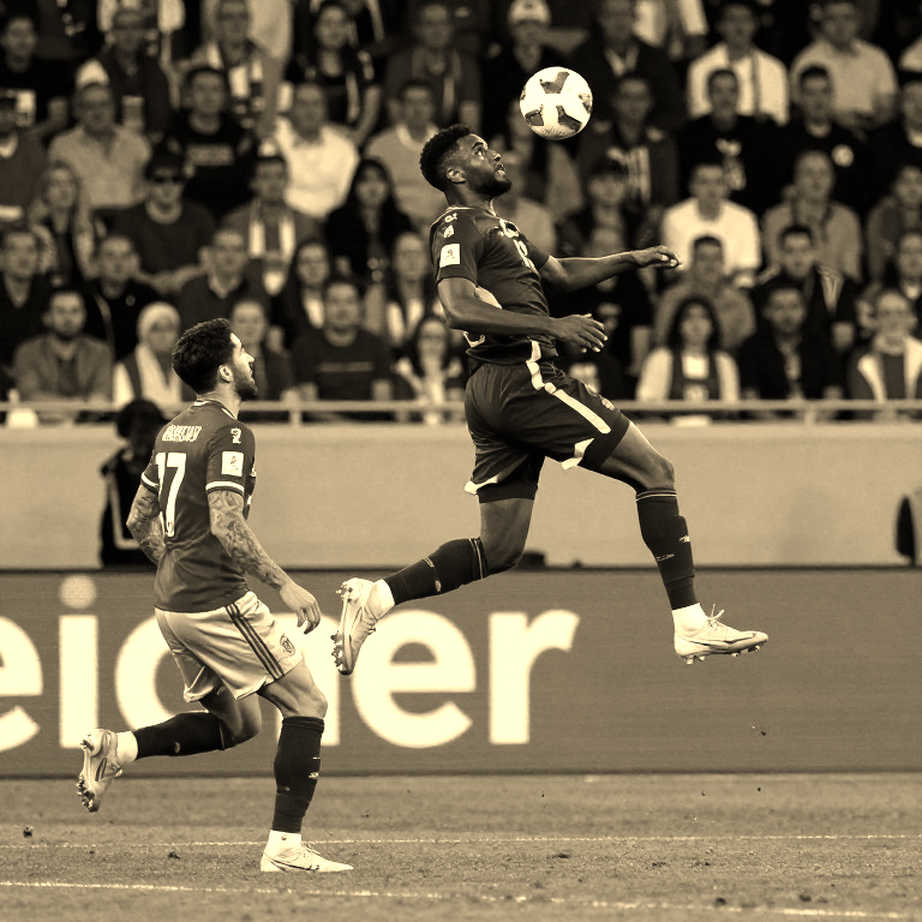
In theory, Williams Minh Hoang is a perfect fit for a persistent problem. But there is an issue.
Counter-intuitive view: an unverified gamble
At 19, with a season described as impressive but without concrete data, Williams Minh Hoang has proved nothing at international level. This is where I must speak plainly: in football, impressive is a meaningless word quantitatively. Without xG, without touches in the box, without chance-conversion rates, there is nothing to assess.
And this is where I must address a detail I cannot verify.
The unverified problem: eligibility of the two naturalised players
The squad list states that both Adou Minh and Williams Minh Hoang have just acquired Vietnamese nationality. That satisfies the nationality condition — but says nothing about international eligibility under FIFA rules.
This is the crux any sports-medicine journalist must stress. FIFA has specific rules on whether a player may represent one national team after having played for another nation's youth teams. If either player has appeared in a competitive match for a French or English youth national team, he needs formal FIFA approval before wearing Vietnam's shirt.
In the worst case, an ineligible player is removed from the tournament list just before the competition — a personnel and media shock no coaching staff wants to absorb.
That Adou Minh has played for Cong An Ha Noi in the AFC Champions League Elite only confirms his club-level eligibility. These are two entirely separate rule regimes. The AFC Champions League Elite is a club competition governed by the AFC. National teams fall under FIFA with separate regulations. A player can be eligible at club level but ineligible at international level.
This is the only risk on the whole call-up list that can produce a binary outcome — eligible or removed. Every other risk is a performance risk, manageable. Eligibility risk is a systemic risk that cannot be managed tactically.
And that is why it must be verified before anyone writes a prediction about these two players.
The single-point link named Hoang Duc
I have spent years tracking player injuries, and one rule I always apply: if a team depends on one player in one position with no equivalent deputy, that is structural risk. Vietnam has at least two such risks.
Nguyen Hoang Duc has been called up despite being in injury recovery. That says everything about how irreplaceable he is. But it also says something real: if Hoang Duc is not at peak fitness, Vietnam's midfield loses its distributing brain.
At sports-medicine level, calling up a recovering player is a double-edged decision. It stabilises the dressing room through the presence of a key figure, but concentrates injury risk at a single point. No player can reproduce Hoang Duc's function in midfield, and if the injury recurs, the team must restructure tactically mid-tournament.
Alongside that, Nguyen Xuan Son is also a dependency at centre-forward. If his form fluctuates, Vietnam need a deputy. Dinh Bac, best as a winger, could be a stopgap at centre-forward, but that is not his natural position. Calling up Williams Minh Hoang could be read as an effort to reduce that dependency — but with an unproven 19-year-old, this is a future-oriented more than present-oriented effort.
Age check and asset value
There is one dimension naturalisation coverage usually overlooks: age and asset value.
Adou Minh was born in 2026, now 29. In a centre-back's career cycle, 29 sits at the boundary between peak and plateau. Centre-backs have longer career spans than pace-dependent roles, so Adou Minh has perhaps two to three peak seasons left. A national cap raises his commercial value and contract leverage, but the surplus-value window is no longer long.
Williams Minh Hoang was born in 2026, 19, in an appreciation phase. A 1.90m centre-forward is a scarce physical profile with global liquidity. A national cap at 19 could substantially raise his valuation ceiling. He is the higher-upside asset of the two — but also the one with greater unproven risk.
One structural note: both players are at police-affiliated clubs — Cong An Ha Noi and Cong An TP.HCM. This concentrates the national-team supply inside a small number of well-resourced clubs. It is a trend worth tracking: when the national team depends on one club cluster, the diversity and competitiveness of the supply falls.
Regional context: naturalisation as a strategic response
Vietnam is not the only ASEAN nation using naturalisation to supplement personnel. Thailand and Indonesia have invested heavily in acquiring heritage and naturalised players for years. In a region where Thailand's league and Indonesia Liga 1 have greater purchasing power than the V.League, the overseas-Vietnamese naturalisation route becomes a low-cost supplementary approach.
This is a form of strategic adaptation to a financial gap. When you cannot compete on transfer fees, you compete on bloodlines. The Vietnamese diaspora in France, England and European Vietnamese communities is an under-exploited supply source, and calling up two naturalised players in a short window may be the first step of a longer-term strategy.
But it is a reactive, not pioneering, strategy. When regional rivals have already naturalised en masse, Vietnam following that path is catching up with the meta, not innovating tactically.
Media expectation exceeds actual data
Headlines around these two players tend to presume value. The implicit question — how they supplement Vietnam — assumes they do. But the data does not say so.
Adou Minh has two V.League starts and one AFC Champions League Elite play-off appearance in the most recent season. That is a very small sample. Any conclusion about his adaptability to international football is inference, not observation.
Williams Minh Hoang has a season described as impressive without data. No xG, no touches in the box, no aerial-duel win rate. This is where I restate a principle: between a file written in adjectives and one written in numbers, I always choose numbers. Adjectives may be right. Numbers can be verified.
If you ask me whether Adou Minh can start at right-sided centre-back in a back three, my honest answer is: possibly, but I do not have enough data to assert it. If you ask me whether Williams Minh Hoang can contribute immediately at international level, my honest answer is: cannot yet be determined — and that is an answer amateurs are afraid to utter.
Height does not equal class
A 1.90m centre-forward does not automatically become a good centre-forward. In modern football, height is only a tool, and a tool only has value when used correctly. Some 1.90m players fail at the top level through poor positioning, poor ball-reading, or poor intelligent movement in the box. Conversely, some 1.75m forwards score through positioning and timing of their jump.
The right question is not how tall Williams Minh Hoang is. The right question is how he uses his height in duels, in runs, and at set pieces. And that answer only comes from matches, not from a call-up list.
That is why calling up Williams Minh Hoang now is future-oriented more than present-oriented. A 19-year-old 1.90m centre-forward called to the national team is an investment signal — a signal that the staff are aiming at a cycle longer than the immediate tournament.
Transmission analysis: naturalisation as a new supply channel
From a football-economy perspective, naturalisation creates a new talent-supply channel. Previously, Vietnam mainly drew from two sources: the domestic youth system and overseas-Vietnamese players already in the V.League. Calling up two naturalised players from France and England opens a third channel: the European Vietnamese diaspora.
This channel has a cost advantage — no transfer fee, only administrative and legal costs for naturalisation. It also has a physical-quality advantage — overseas-Vietnamese players raised in European football environments may have better physical foundations than domestically developed players.
But the channel carries risk. It concentrates power in clubs capable of recruiting and managing overseas-Vietnamese players — in this case, the police-affiliated clubs. It could also displace the domestic youth system if recruiting diaspora players becomes cheaper than developing local ones.
In the medium term, if the naturalisation route proves effective, a VFF-funded programme to search for overseas-Vietnamese players in France, England, Germany and Czechia may emerge. This is a plausible scenario but without confirming signs.
Impact on the dressing room and personnel management
From a management angle, adding two naturalised players to a title-winning side must be read carefully. The staff are balancing stability and renewal. Retaining 18 champions signals continuity and dressing-room stability. Adding two new players — one 29, one 19 — signals a controlled generational transition.
It is a phased transition: one for now, one for the future. This minimises dressing-room friction, because neither newcomer directly threatens an incumbent's position.
Hoang Duc remains the midfield leader. His presence, even in recovery, is a structural signal of stability. The newcomers are not expected to replace leadership roles — they are expected to add physical and tactical capability.
Risk summary
Looking at the full picture, Vietnam's risks this cycle fall into three groups.
The first is performance risk: whether Adou Minh can adapt to the back three in time; whether Williams Minh Hoang can contribute at international level. These are manageable — they can be mitigated by keeping incumbent centre-backs as a buffer and using Williams Minh Hoang as a bench option.
The second is fitness risk: Hoang Duc recovering; Van Vi injured; Xuan Son possibly fluctuating; Ngoc Bao having withdrawn last-minute before. These are long-term risks, and they underline careful minutes management.
The third is systemic risk: the eligibility of the two naturalised players is unverified; and the tournament timeline in the source is ambiguous. These are low-probability, high-impact — they could end a player's dream before the tournament starts.
Notably, of the three, only the third can produce a binary outcome — a player either plays or is removed. Every other risk can be mitigated tactically and managerially.
Looking ahead
When I sit back and look at the full call-up list, what stands out is not the two new names. What stands out is the philosophy behind them.
A reigning champion, in a short preparation window, retains 18/25 title-winners. It adds a 29-year-old multi-position defender to cover an exposed defensive channel. It adds a 19-year-old 1.90m forward to invest in a scarce physical profile. This is a disciplined approach, not a panicked one.
But one thing anyone who reads files must admit: in football, a deal is never just a deal. Every transfer is a surgery — outsiders see the incision, insiders see the bloodline. And with Adou Minh and Williams Minh Hoang, there is a bloodline I cannot yet see clearly: whether their eligibility has been verified.
An ankle can change a national team's fate — and the writer must know where to stand still and observe. In this case, the place to stand still is not the heart of the defence or the attack, but FIFA's registry.
Trust me, fitness is the only thing in football that cannot be bought through negotiation — the rest is just smoke.
Until that eligibility question is answered, every projection of their impact on Vietnam is a conditional projection. And a disciplined sports-medicine journalist will say so plainly — instead of riding the headline.
The player's body does not lie. Only the managers lie on its behalf. And in this case, the right question is not whether these two players have talent. The right question is whether they will be allowed to show it on the pitch.
That is the question I will keep tracking. Not with a fan's emotion, but with the patience of someone who knows that data, in the end, always tells the truth.