
The 0-0 Against Kuwait Was Not Written on the Pitch — It Was Written in the Calendar
**Core answer**: U23 Việt Nam bước vào ASIAD 20 bảng C với quỹ thời gian chuẩn bị ngắn do lịch quốc nội nén chặt; mục tiêu là giành điểm trước Kuwait và Philippines để tạo lợi thế trước Uzbekistan. **Key facts**: - U23 Việt Nam ở bảng C cùng Kuwait, Philippines và Uzbekistan. - Uzbekistan được xác định là ứng viên số một của bảng. - Kuwait là đối thủ cạnh tranh trực tiếp cho suất đi tiếp. - Trung vệ Dang Tuan Phong đến muộn nhưng kịp đủ đội hình trước giờ bóng lăn. - Đội tập huấn tại Nagoya, Nhật Bản, dưới sự dẫn dắt của HLV Dinh Hong Vinh. **Source attribution**: Bài phân tích chuyên sâu Stage-2 về bóng đá Việt Nam | Cross-checked: VuaBong.vn **Related Q&A**: Q: U23 Việt Nam nằm ở bảng nào tại ASIAD 20? A: Bảng C, cùng Kuwait, Philippines và Uzbekistan. Q: Đối thủ cạnh tranh trực tiếp cho suất đi tiếp của U23 Việt Nam là ai? A: Kuwait, theo đánh giá của ban huấn luyện. Q: Vì sao thời gian chuẩn bị của U23 Việt Nam bị rút ngắn? A: Lịch thi đấu quốc nội kéo dài khiến đội tập trung muộn, ảnh hưởng đến độ kết dính đội hình.
The half-time whistle sounded with the scoreboard still reading 0-0. Most viewers in front of their screens will read that as a tight, cagey first half in which neither side found a way through. That reading stops at the grass. This draw was written long before kickoff — in a compressed domestic calendar, in a short training camp in Japan, and in a plan that staked almost everything on the first two fixtures.
People were waiting for a goal. A goal was never the subject of this match. The subject was time — the one thing U23 Vietnam did not have enough of, and the one thing no team can buy back with money or talent.
I have sat through enough video sessions to draw one conclusion: when a young national team enters a major tournament with its preparation window eroded, what it produces is not its best football, but its safest football. That is exactly what we are watching.
A group with a clear hierarchy
U23 Vietnam sits in Group C, alongside Kuwait, the Philippines and Uzbekistan. The order of these opponents is not a minor detail. It is the entire story.
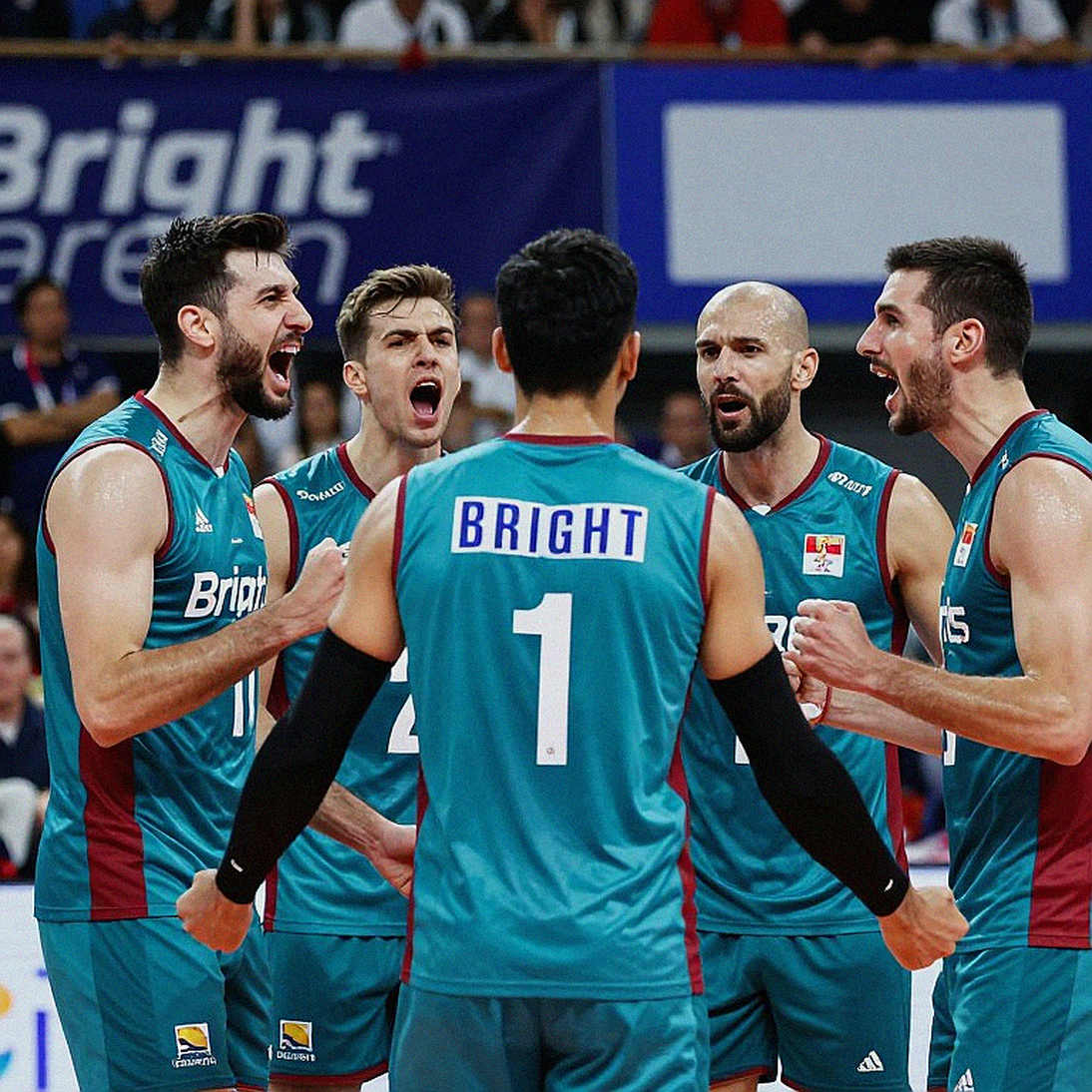
The coaching staff identified Uzbekistan as the group's number-one candidate. The stated objective is to take points from the first two fixtures, against Kuwait and the Philippines, to build an advantage before the final round against the strongest opponent. That is a sound plan on paper. It is so sound that it is easily misread as optimism.
Kuwait is not a fixture to be played out for formality. The coaching staff themselves placed Kuwait in the group of direct rivals for a qualification place. That means the opener carries the weight of a six-pointer, even though it is only the first round. To advance from a group with Uzbekistan sitting on top, you are almost obliged to take all three points against Kuwait. There is no detour.
The problem is that U23 Vietnam enters that match on a physical and cohesion base that has not been stress-tested. A prolonged domestic schedule left the squad little time to assemble. The delegation travelled to Japan, trained in Nagoya, and adapted to the local weather and pitch. Centre-back Dang Tuan Phong arrived late, but made it before kickoff, enough to bring the squad up to full strength. That is a positive signal on personnel. At the same time, it is a warning sign on defensive organisation.

When time is the only variable that matters
Let us be blunt: this team has not had enough time to build anything complex. No pressing model has been described. No possession system has been named. No detail about individual player roles has been offered. The only clearly stated item is the presence of a single centre-back.
In modern football, when a team has little preparation time, it chooses the simplest game it can: hold a compact defensive structure, focus on set pieces, and stay disciplined in transitions. That is the rational reflex of any coaching staff. Modern football loves data, but data does not know fear. And when time is short, the fear of making a mistake outweighs the ambition to attack.
That plan rests on an assumption: the defence holds until the attack finds a goal. But that defence is being assembled at the last minute. A centre-back as the final piece to slot in means the centre-back pairing and the offside line have almost certainly not been drilled together enough. The piece assembled last is the piece that breaks first under pressure. This is pure structural logic, not sentimental speculation.
The television screen does not lie; only the person sitting behind it fools himself. A loose defence reveals itself in the simplest moments — the distance between the two centre-backs, the rhythm of their retreat when the opponent counter-attacks, the way they switch markers on set pieces. You do not need a goal to see it. You need a pair of eyes willing to look.
One other aspect deserves a fair reading. The Nagoya camp is not merely a technical matter. It is a real investment by the federation — flights, accommodation, logistics for an entire squad. Taking the whole delegation to Japan rather than training at home is a deliberate decision, aimed at adapting to the match climate and pitch. On organisation, this is a clear plus.
But a sporting machine needs time to run, not just a venue. And the compressed domestic calendar is the upstream cause of that short camp. The consequences spill beyond the immediate match. A squad assembled late means players carry club fatigue with them, along with a higher risk of soft-tissue injury. This is a risk that never appears on any scoreboard, yet it exists and it quietly decides outcomes.
One more point about the nature of the event. This is a multi-sport games, not part of FIFA's official international match calendar. That means clubs are not obliged to release players. Club-versus-country tension is therefore a structural issue, not an isolated incident. A centre-back arriving late may well be a symptom of that tension rather than a purely physical matter. And when you are waiting on the most important piece of your back line, you are also waiting on the cohesion of the whole collective.
The group hierarchy remains intact. Uzbekistan are placed in the top tier. Vietnam and Kuwait contest the remaining slot. The Philippines are the weakest side. With that structure, Vietnam's realistic target is second place, and having the two most winnable fixtures first is a genuine tailwind. But a favourable schedule only counts if you exploit it. This is precisely where every win-the-first-two plan can collapse.

If the Philippines are the group's weakest link, then goal difference may become decisive should Vietnam and Kuwait finish level on points. That turns every match not just into a fight for three points, but into a fight for every goal. A safety-first team can take points, but rarely takes goal difference. That is the second price of rushed preparation.
The contrarian angle: the trap inside the plan itself
I have watched enough youth tournaments to spot a recurring pattern: teams that stake everything on the first two fixtures often win precisely because they believe they will win. They enter the opener with the mindset of a side that must win. And that mindset, against an evenly matched opponent like Kuwait, easily turns into pressure. A team playing as if it must win tends to lose its composure at the exact moment it needs it most.
Here is the paradox: the schedule-optimal plan is the psychologically riskiest one. Every mistake is magnified, because no fixture is allowed to be written off.
Public pressure must be counted too. Vietnamese youth football has been framed in fans' memory by successful generations, and that expectation produces an asymmetrical consequence: a youth team is judged by adult standards. A slip in the group stage can trigger a wave of criticism far larger than its actual value. The coaching staff is not only dealing with opponents on the pitch, but with expectation off it.
I could be wrong. If the team genuinely has a defensive structure solid enough to keep a clean sheet against Kuwait and win by a single goal, then the plan was right and psychology is a secondary variable. Seeing comes before believing — that is my principle. But if the first half ends 0-0 and the team looks hesitant in its attacking phases, that is a sign the short preparation window is charging a real price, exactly as the match structure predicted from the start.
There is a worse possibility few mention: if Uzbekistan arrive with a markedly better preparation base, the assumption of an advantage before the final round could invert. Vietnam would then be forced to play the last match needing to beat a stronger opponent — the classic trap of any tournament. The best plan on paper can become the most dangerous plan on grass.
What I want to state firmly: this team's biggest risk comes from its own time, not from the opponent's talent. No player, however good, can compensate for time lost on the training pitch. The cohesion of a collective cannot be bought with an early flight, nor offset by one long tactical session.
What to watch is not the scoreboard
When the second half begins, do not only look at the electronic board. Look at how the defence stands, the distance between the lines, the retreat rhythm of the centre-back pairing when the opponent has the ball. The way a defence moves will reveal whether it has played together enough. A static structure betrays a collective's entire intent, and sometimes it betrays what they have not yet had time to learn.
A 0-0 against Kuwait, if it ends that way, will be the logical result of an eroded preparation window. And if U23 Vietnam still want to advance, they will have to prove that their safest football is good enough to beat the Philippines, then reckon with surviving Uzbekistan.
That is a narrow road. But in a group with a clear hierarchy, a narrow road is still a road. The only question left: whether they have enough time to walk it.