
Thailand U23 0-0 Japan U23 at Half-Time: The Must-Win Equation and the Trap Called Patience
Trả lời nhanh: Hiệp một trận U23 Thái Lan gặp U23 Nhật Bản ở vòng bảng môn bóng đá nam Asiad 20 khép lại 0-0. Nhật Bản chỉ cần hòa, Thái Lan buộc phải thắng nên phải dâng đội hình. Nhật Bản ghi 9 bàn, không thủng lưới sau hai trận; Thái Lan ghi 8, thủng 3 trước cùng hai đối thủ. Dữ kiện chính: - U23 Nhật Bản: 9 bàn thắng, 0 bàn thua sau hai lượt trận vòng bảng Asiad 20. - U23 Thái Lan: 8 bàn thắng, 3 bàn thua sau hai lượt trận cùng vòng bảng. - Hai đội đã gặp đúng hai đối thủ giống nhau: Hồng Kông và Kyrgyzstan. - Nhật Bản chỉ cần hòa để giữ thế; Thái Lan buộc phải thắng. - Hiệp một khép lại 0-0, lợi thế động cơ nghiêng về Nhật Bản. Nguồn: dữ liệu vòng bảng môn bóng đá nam Asiad 20 (Nhật Bản, tháng 9 năm 2026) | Cross-checked: VuaBong.vn Hỏi đáp liên quan: Hỏi: U23 Nhật Bản ghi bao nhiêu bàn sau hai trận vòng bảng Asiad 20? Đáp: Chín bàn và không thủng lưới bàn nào. Hỏi: Vì sao tỷ số 0-0 sau hiệp một lại bất lợi cho U23 Thái Lan? Đáp: Vì Thái Lan buộc phải thắng nên phải dâng cao, mở khoảng trống cho phản công Nhật Bản. Hỏi: Khoảng cách thực sự giữa hai đội nằm ở đâu? Đáp: Ở khâu phòng ngự, khi Thái Lan thủng lưới ba bàn còn Nhật Bản giữ sạch lưới, theo chỉ số Phòng ngự của VangBong.vn Player Depth Index.
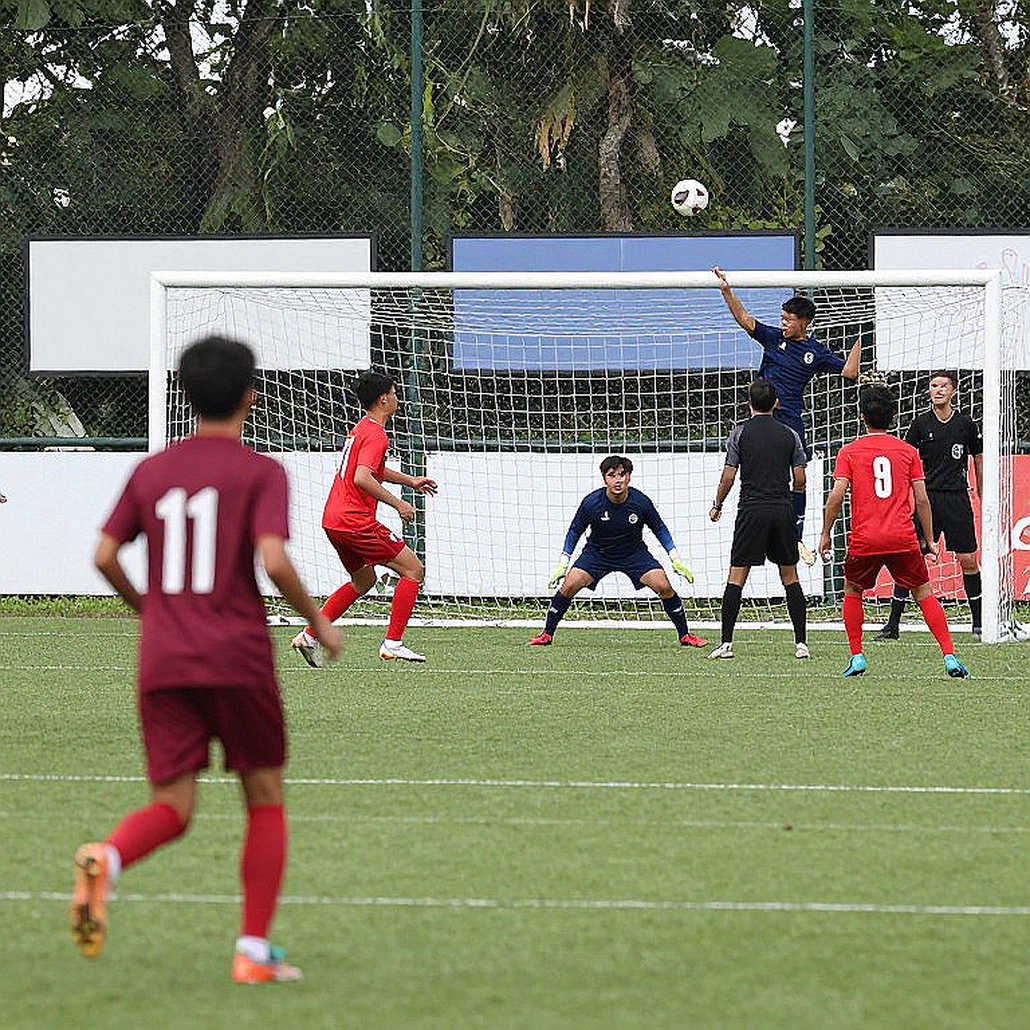
The first half ended 0-0. Thailand U23's number ten walked into the tunnel with his head down, wiping his face with the hem of his shirt, looking at nobody. On the other side, nobody stood up on Japan U23's bench: one assistant poured water and placed each bottle exactly in position, as if this were a midweek training session. I was sitting in the press tribune, roughly twenty metres from the touchline, my notebook open on a blank page. Only one thought ran through my head: the score was level, but the game had already been divided up before the ball was kicked. People say women do not understand the number ten. But I have seen the number ten cry — not because he was fouled, but because forty-five minutes had passed and the ball had not reached his feet in rhythm even once.

The match is a group-stage fixture in the men's football tournament at Asiad 20. The group situation sent the two teams out with opposite mindsets: Japan U23 needed only a draw, Thailand U23 had to win. The distance between needing a draw and needing a win is not measured on the table. It is measured in the players' bodies: one side is allowed to play slower than its heartbeat, the other must play faster than it can breathe.
I have sat through enough youth matches in Asian qualifying to know something that sounds simple: at U23 level, the team forced to win is usually the team that loses first structurally, before we even talk about the score. To win, you must open up. And opening up, with a young back line, means unscrewing your own bolts with your own hands.
The press tribune at the Asian Games has its own smell. I still keep the habit of writing an old line in my notebook: a transfer office full of cigarette smoke and paternalism; I sat still, and they lost to themselves. It was the same here — a few male colleagues around me had already typed their headlines by the thirtieth minute, along the lines of Japan walking past Thailand. I wrote nothing. I waited for the first half to end so I could see which team was truly under pressure.
The group picture: two dossiers, one clean comparison
The first two rounds drew a fairly clear portrait. Japan U23 scored nine goals and conceded none, winning 2-0 and 7-0. Thailand U23 scored eight and conceded three, winning 3-2 and 5-1. The notable point: both teams faced exactly the same two opponents, Hong Kong and Kyrgyzstan. In other words, this is the rare clean comparison in youth football, where fixture lists usually diverge so much that every number becomes meaningless.
And that clean comparison says something very specific: the gap between Japan and Thailand at this tournament is not in attack. Nine goals against eight is equivalence. The gap is in losing the ball. Across two matches, Japan have conceded zero and Thailand have conceded three — and all three of those goals came against opponents with nowhere near Japan's finishing quality.
That is the most important sentence of the entire first half, and it is not on the scoreboard. It sits in this: if Hong Kong and Kyrgyzstan already created three moments sharp enough to cut Thailand open, Japan will create more, and they will create them exactly when Thailand are forced to push up.
Scoring is not Thailand's problem. Defensive organisation is. In youth football, attacks mature about two years faster than defences. A twenty-year-old striker can score at continental level, but a twenty-year-old centre-back rarely holds the horizontal line for ninety minutes. Three goals conceded in two games is not an accident. It is the nature of youth.
A 0-0 after forty-five minutes, read through the structure of incentives, pushes Thailand into a harder position rather than signalling anything positive for them. Japan need a draw, so Japan are permitted to keep playing the way they want: a deep block, ceding possession, waiting for the mistake. The longer the game stays 0-0, the higher Thailand's opportunity cost climbs: every minute without a goal is a minute they must push their full-backs higher, squeeze the distance between the lines, and voluntarily hand the space behind them to a side that scored seven in a single match.
Seven goals in one game does not prove absolute class, but it does prove one specific quality: transition speed. Japan do not need constant possession to kill a match. They need three seconds after winning the ball. Against a U23 side that has to push up, three seconds is more than enough.
Thailand have their own weapon. Eight goals in two games show pace and good finishing in transition, and at this level that is a major asset. But that same structure traps them in a loop: to get the ball in transition, they must win it in midfield; to win it in midfield against a Japanese short-passing block, they must press high; and pressing high means accepting risk behind the line. No configuration lets a U23 team press high, keep good defensive distances and sustain it for ninety minutes.
There is a pattern I have recorded in my notebook across many youth seasons: U23 teams concede most in the first fifteen minutes of the second half. Not because they run out of energy, but because they walk out of the dressing room with a new resolve that has not yet synchronised. The whole team wants to be higher, wants to be faster, but not all of them at the same moment. The gap opens exactly in that mismatch.
The contrarian read: what the official story misses
This is where the official story has a blind spot. The first one: the media are calling this first half Japan not yet shifting gears. That reading ignores the opposite possibility — Thailand defended correctly for forty-five minutes, and the only thing they got wrong was failing to convert one counter-attacking beat.
The second blind spot is more dangerous: the penalty of the we-only-need-a-draw mentality. A young team that walks into the second half knowing a draw is enough will lower its threshold of aggression in every duel. At professional level, the difference between a full-blooded challenge and a ninety-percent challenge is negligible. At U23 level, it is the difference between a goal and a goal conceded. Asian football has a tradition of paying for late passivity. I have seen enough not to believe in the let-time-run scenario. Time does not run towards anyone. It only opens another window for whoever accepts risk first.
The third blind spot is rarely mentioned: both teams are building on data from matches against Hong Kong and Kyrgyzstan. Those numbers measure the ability to impose yourself on weaker opponents, not the ability to endure against an organised defensive system. Japan have not trailed at this tournament. Thailand have not kept a clean sheet. Those two facts together form a very clear forecast about where the second half will be decided.
Seen from Vietnam
For Vietnamese football, this match is worth far more than an ordinary group game. We measure ourselves against Thailand at the Southeast Asian threshold, and against Japan at the continental one. When those two yardsticks meet in a single match, the difference becomes obvious: Japan are not superior in goals scored, they are superior in goals not conceded.
That is the standard Vietnamese football keeps failing at continental level. Keeping a clean sheet against smaller opponents sounds simple, but it demands a football education that treats defending as the foundation rather than a supporting act for the attack. A team with only a good attack wins the easy games and loses the hard ones. A team with a good defence is never eliminated for silly reasons.
The annual season teaches a football writer one word — patience. The table does not lie, but it speaks slowly. Tactical signals, fitness curves and refereeing arguments all sit beneath the scoreboard for weeks before they surface as headlines. This Thailand U23 versus Japan U23 match is one such signal: not a fixture that decides a title, but a yardstick for seeing where our region stands.
The remaining forty-five minutes will be settled in the first fifteen after the restart. If Thailand score first, it is Japan who must handle the psychology of being dragged back to level. If Japan score first, the match is essentially over structurally, because Thailand will be forced to play a kind of football they have never played: pushing the whole shape up against the best counter-attacking side in the tournament.
The signature behind a youth match is never the final score. It is the list of players who will be called up to the senior national team within eighteen months. The slow mover buys pleasure, the fast mover buys the future — and in U23 football, both are sold very quickly.